
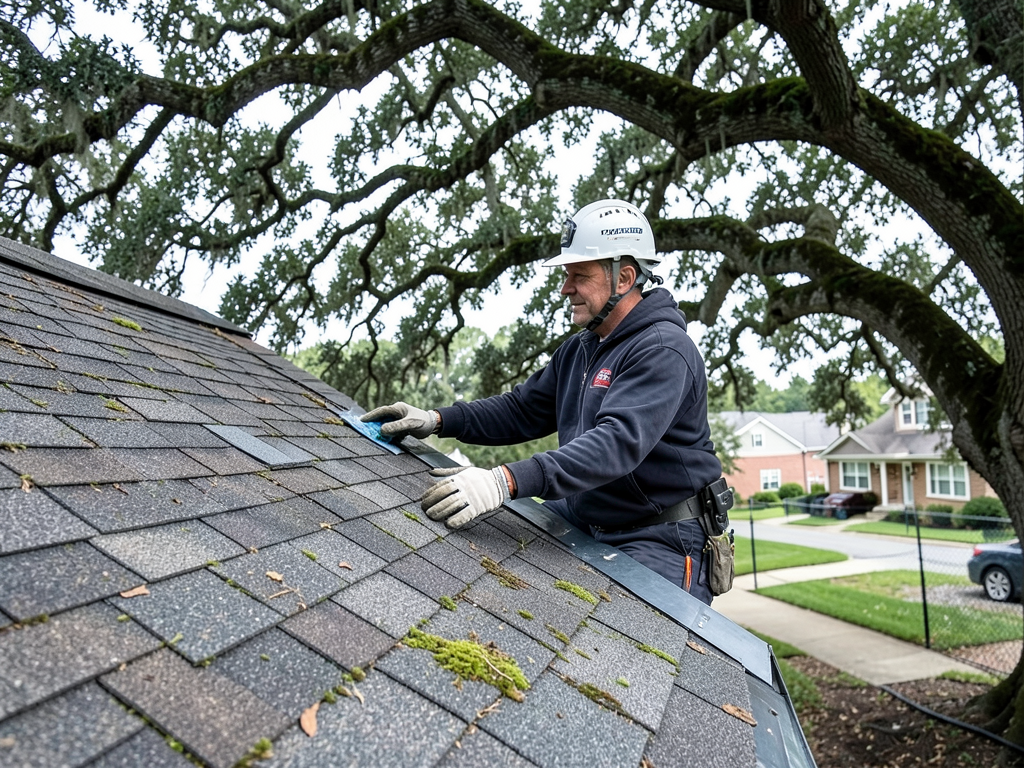
Protecting your roof from the heavy overhanging trees in Traders Point
The dense tree canopy that makes Traders Point so beautiful also creates serious risks for your roof. Heavy overhanging branches scrape shingles, trap moisture, and become dangerous projectiles during Indiana’s frequent thunderstorms. Your roof faces constant assault from falling leaves, twigs, and the occasional limb that can cause thousands in damage before you even notice a problem. The best asphalt shingle brands for Greenwood homes (and why they matter).
Protecting your roof requires understanding the specific threats in your neighborhood. The mature oaks and maples common in Traders Point develop thick canopies that hold moisture against your shingles, accelerating deterioration. During winter ice storms, those same branches become weighted with ice and can snap under pressure, crashing through your roof or pulling down gutters. Spring and summer bring high winds that turn loose limbs into battering rams against your home. What to do when a hail storm hits your Fishers neighborhood.
The good news is that most tree-related roof damage is preventable with the right maintenance strategy. Regular inspections catch problems early when they are cheap to fix. Proper pruning techniques keep trees healthy while protecting your home. And knowing when to call professionals saves you from dangerous DIY mistakes that could cost more than the original problem.
Understanding the specific risks of Traders Point trees
Traders Point sits in a transition zone between urban and wooded areas, creating unique challenges for homeowners. The mature tree canopy includes species that pose different levels of risk to your roof. Silver maples, common in older neighborhoods, have weak wood that breaks easily in high winds. Their shallow root systems make them unstable during heavy rains when soil becomes saturated.
White oaks and red maples provide beautiful shade but grow large limbs that extend far over roofs. These heavy branches can cause significant damage if they fall. The Emerald Ash Borer has killed many ash trees throughout Marion County, leaving dead standing timber that becomes increasingly dangerous each year. A dead ash tree can drop limbs without warning, especially during storms.
Tree roots also create problems you cannot see. Expansive Indiana clay soils shrink and swell with moisture changes, and tree roots accelerate this movement near your foundation. This shifting causes nail pops in your roof deck and creates gaps where water can enter. The moisture trapped by overhanging branches also promotes moss and algae growth, which holds even more water against your shingles.. Read more about Why impact-resistant shingles are becoming the standard for homes in McCordsville.
The 10-foot rule for tree clearance
Industry experts recommend maintaining at least 10 feet of clearance between your roof and the nearest tree branches. This distance provides several critical protections. It prevents branches from scraping and wearing away your shingle granules during wind. It allows sunlight and airflow to dry your roof after rain, preventing moss and algae growth. And it gives you time to react when a branch does fall, as it will land on your lawn rather than through your ceiling.. Read more about Dealing with moss growth on your Zionsville roof without ruining the shingles.
Measuring this distance requires looking at the full grown size of your trees, not just their current reach. A young maple might only extend five feet over your roof now, but in five years it could stretch fifteen feet. Planning for mature tree size prevents constant battles with encroaching branches. Some species like silver maple grow faster and need more aggressive pruning schedules than slower growing oaks.. Read more about Why your gutters might be the real reason your roof is leaking in Beech Grove.
Commercial properties near I-465 often face different challenges with taller trees that drop leaves and debris onto large flat roofs. These buildings need regular maintenance to keep drainage systems clear. The weight of accumulated leaves and water can cause structural problems over time, especially on older buildings with aging roof decks.
Seasonal maintenance checklist for Indianapolis homeowners
Spring in Indianapolis brings rapid growth and the first major storm season. This is the time to inspect your roof for winter damage and prune any branches that grew too close during the dormant season. Look for cracked or hanging branches that could fall during summer thunderstorms. Clean your gutters thoroughly, as winter debris combined with spring pollen creates ideal conditions for clogs.. Read more about Preparing your roof for the spring rain season in New Palestine.
Summer requires vigilance for storm damage. After each severe weather event, walk around your property and look up at your roof. Check for branches that may have shifted during the storm or leaves accumulating in valleys where they trap moisture. This is also when you will see the most active growth, so schedule major pruning before trees become too dense.
Fall leaf drop creates the biggest maintenance challenge. Deciduous trees in Traders Point dump tons of leaves onto roofs and into gutters. If left unattended, this organic material holds moisture against your shingles and creates perfect conditions for moss growth. Consider installing gutter guards before the leaves fall to reduce maintenance time. After the last leaves drop, do a final inspection to catch any branches that became problematic during the growing season.
Winter preparation is critical in Indiana. Heavy wet snow and ice can bring down even healthy branches. Before the first freeze, remove any dead or dying limbs. Check that your attic insulation is adequate to prevent ice dams, which form when heat escapes through your roof and melts snow that refreezes at the edges. Ice dams force water under shingles, causing leaks that may not show up until spring. EPA tree maintenance guidelines.
DIY pruning vs. professional tree care
Small branches within reach from a ladder can be pruned by homeowners using proper techniques. Always cut branches at the branch collar, the swollen area where the branch meets the trunk. This allows the tree to heal properly and prevents disease. Never cut branches flush with the trunk or leave stubs, as both practices harm tree health.
Large branches hanging over your roof require professional arborists. These experts understand proper pruning cuts that maintain tree health while reducing risk. They use specialized equipment like aerial lifts to reach high branches safely. Professional pruning also includes crown thinning, which reduces wind resistance and makes trees less likely to lose limbs during storms.
Safety considerations make professional help essential for many situations. Working near power lines, on steep roofs, or with large branches creates serious injury risks. The cost of professional tree care is minimal compared to emergency roof repairs or medical bills from falls. Many arborists offer free estimates and can identify hazardous trees you might miss. Getting emergency roof repairs in Broad Ripple before the next big rain.
Ask about the arborist’s credentials before hiring. Certified arborists from the International Society of Arboriculture follow industry standards like ANSI A300 for pruning. These standards ensure proper cuts that do not damage trees or create hazards. Avoid anyone recommending tree topping, a harmful practice that creates weak new growth prone to breaking. International Society of Arboriculture.
Emergency storm preparation and response
Indiana’s location in Tornado Alley means severe storms can strike with little warning. Prepare by identifying the trees closest to your home and their condition. Look for signs of decay like mushrooms growing on trunks, cavities, or dead branches in the crown. These indicate trees that could fail during high winds.
Create a storm kit that includes a roof rake for removing heavy snow, a sturdy ladder, and the phone number of a reliable roofing contractor. After storms, inspect your roof from the ground using binoculars. Look for missing shingles, damaged flashing, or debris accumulation. Do not climb on your roof after a storm, as hidden damage could make it unsafe. How to navigate a roofing insurance claim in Brownsburg without the headache.
If a tree does fall on your house, your first priority is safety. Evacuate if there are signs of structural damage like cracked walls or ceilings. Cover the damaged area with a tarp to prevent water intrusion. Document everything with photos for insurance purposes. Most homeowner policies cover sudden tree damage, but they may deny claims if they determine you neglected obvious hazards.
Insurance companies often look for signs of maintenance neglect when evaluating claims. Keep records of your tree maintenance, including dates of professional pruning and any conversations with arborists about hazardous trees. This documentation proves you took reasonable steps to prevent damage. Some policies exclude damage from trees that were visibly dead or diseased before the storm.
Choosing the right roofing materials for tree-heavy areas
Not all roofing materials handle tree debris equally well. Asphalt shingles remain popular in Traders Point but require more maintenance under heavy tree cover. The granules that protect asphalt from UV rays wear off faster when branches constantly brush against them. Moss and algae growth also accelerate deterioration on shaded roofs. Roofing Beech Grove.
Metal roofing offers superior performance in wooded areas. The smooth surface sheds leaves and debris easily, and there are no granules to wear away. Metal also handles impacts from small branches better than asphalt. While the upfront cost is higher, metal roofs often last 40-70 years compared to 20-30 for asphalt, making them cost-effective for long-term homeowners.. Read more about How to handle emergency tree removal and roof tarping in Meridian Hills.
Roof color affects maintenance needs in shaded areas. Light colored roofs show moss and algae stains more prominently, while dark colors hide them but absorb more heat. Some manufacturers now offer algae-resistant shingles with copper granules that prevent growth. These cost slightly more but reduce cleaning needs in heavily shaded areas.. Read more about How to tell if your Beech Grove roof just needs a repair or a total overhaul.
Gutter guards are essential for homes under heavy tree cover. Mesh guards prevent large debris from entering gutters while allowing water flow. Some homeowners prefer reverse curve guards that direct water into gutters while deflecting leaves. The best choice depends on your specific tree types, as pine needles require different protection than large oak leaves.
Local building codes and permit requirements
Marion County follows the Indiana Residential Code, which includes specific requirements for roofing and drainage. Ice barrier requirements under R905.1.2 mandate protective underlayment in eaves and valleys where ice dams commonly form. This code recognizes Indiana’s freeze-thaw cycles and requires materials that prevent water backup under shingles.
Tree removal permits are not typically required for single family homes in Indianapolis, but historic districts may have restrictions. The Traders Point area has seen increased development pressure, and some neighborhoods have formed associations that regulate tree removal. Check with the Indianapolis Department of Public Works before removing large trees, especially if they are near property lines or power lines.
Roof replacement projects require permits from Marion County. The permitting process ensures your contractor follows current building codes and installs proper underlayment and flashing. Unpermitted work can cause problems when selling your home and may void manufacturer warranties. A reputable contractor will handle permitting as part of the project.
Stormwater management regulations affect how you handle roof runoff. The White River watershed requires proper drainage to prevent flooding. This means your downspouts must direct water away from your foundation, and some areas require rain barrels or other retention systems. Tree roots can interfere with these systems by growing into drainage pipes.
Professional inspection and maintenance services
Annual roof inspections catch problems before they become expensive repairs. A professional inspector looks for signs of tree damage that homeowners miss, like granule loss patterns indicating branch rubbing or small punctures from falling twigs. They also check flashing around chimneys and vents where tree debris often accumulates.
Professional gutter cleaning includes inspection of your entire roof drainage system. Technicians can identify sagging gutters, separated joints, or improper slope that causes water to pool. They also check that downspouts direct water at least five feet from your foundation, preventing basement moisture problems that tree roots can exacerbate.
Some roofing companies offer maintenance agreements that include twice yearly inspections and cleaning. These programs often cost less than emergency repairs and provide priority service when problems do occur. The investment pays off through extended roof life and fewer unexpected expenses.
When choosing a contractor, look for GAF certification or similar manufacturer credentials. These certifications require ongoing training and proof of quality workmanship. Ask for references from other homeowners in your area who have similar tree coverage. Local experience matters because tree-related roofing problems vary by region and tree species.
Cost considerations and return on investment
Professional tree pruning typically costs $200-600 per tree depending on size and access. This investment prevents thousands in potential roof damage. A single large branch through your roof can cost $5,000-15,000 to repair, not including interior damage to ceilings, walls, and personal property.. Read more about The hidden costs of ignoring a small leak in your Lockerbie Square townhouse.
Roof maintenance costs vary by material and tree coverage. Asphalt shingle roofs in heavy tree areas need cleaning and minor repairs every 2-3 years at $300-800 per service. Metal roofs require less frequent maintenance but cost more upfront. The longer lifespan of metal often provides better long-term value despite higher initial costs.
Insurance premiums may increase after tree damage claims. Some insurers offer discounts for homes with documented tree maintenance programs. The savings can offset the cost of regular pruning and inspections. Check with your insurance agent about specific requirements for maintaining coverage in wooded areas.
Energy efficiency improvements from proper tree management provide ongoing savings. Removing branches that shade your roof in winter allows solar heat gain that reduces heating costs. Strategic pruning that maintains summer shade while allowing winter sun creates year round energy benefits. These savings accumulate over the life of your roof.
Frequently Asked Questions
How close can tree branches be to my roof?
Maintain at least 10 feet of clearance between tree branches and your roof. This distance prevents damage from scraping branches, allows proper airflow to prevent moss growth, and gives you time to react if a branch does fall. Measure from the branch tips when the tree is fully leafed out.
Should I remove a tree that is too close to my house?
Not necessarily. Many trees can be properly pruned to reduce risk while maintaining their benefits. Removal is usually a last resort when a tree is dead, diseased, or poses immediate danger. A certified arborist can evaluate your specific situation and recommend the best approach.
How often should I have my roof inspected if I have many trees?
Schedule professional inspections twice yearly if you have heavy tree cover. Spring inspections catch winter damage and prepare for storm season. Fall inspections address leaf accumulation and prepare for winter snow loads. Between inspections, check your roof after severe storms for visible damage.
Does homeowners insurance cover tree damage to my roof?
Most policies cover sudden and accidental tree damage, but they may deny claims if they determine you neglected obvious hazards. Insurance companies look for signs of maintenance neglect, so keep records of tree pruning and roof inspections. Some policies exclude damage from dead or diseased trees.
What roofing material is best for areas with many trees?
Metal roofing performs best in wooded areas because it sheds debris easily and resists impact damage. The smooth surface prevents moss and algae growth that commonly affects asphalt shingles in shaded areas. While metal costs more upfront, its longer lifespan often provides better long-term value.
Take action before the next storm hits
Your roof protects everything you value, and the trees around your Traders Point home can either enhance or threaten that protection. The combination of mature trees and Indiana’s severe weather creates a perfect storm for roof damage if you do not take preventive action.
Start with a professional inspection to identify current risks and develop a maintenance plan. This simple step can extend your roof’s life by years and prevent costly emergency repairs. If you notice branches touching your roof or hanging low over your house, schedule pruning immediately before the next storm brings them down.
Call (317) 703-7557 today to schedule your comprehensive roof inspection. Our experienced team understands the specific challenges that Traders Point homeowners face with heavy tree cover and Indiana weather. We will identify potential problems, recommend solutions, and help you protect your investment for years to come.
Pick up the phone and call (317) 703-7557 before the next storm hits. A quick inspection now can prevent thousands in emergency repairs later. Your roof works hard every day to protect your family and belongings. Make sure it has the support it needs to do its job properly.
Don’t wait until you see water stains on your ceiling or hear branches scraping against your shingles at night. Those are signs that damage has already begun. Take control of your home’s protection today with professional guidance from local experts who understand your specific needs.. Read more about Stop those ice dams from ruining your Southport home this winter.
You may also find this helpful. What to do when a raccoon or squirrel decides your Meridian-Kessler roof is its new home.
{
“@context”: “https://schema.org”,
“@type”: “BlogPosting”,
“headline”: “Protecting your roof from the heavy overhanging trees in Traders Point”,
“description”: “Learn how to protect your Traders Point roof from tree damage. Discover local risks, pruning tips, and prevention strategies for Indianapolis’s wooded neighborhoods.”,
“wordCount”: 2734,
“datePublished”: “2026-03-12T15:43:00.000Z”,
“dateModified”: “2026-03-12T15:43:00.000Z”,
“inLanguage”: “en-US”,
“mainEntityOfPage”: {
“@type”: “WebPage”,
“@id”: “https://eliteroofingindianapolis.com”
},
“publisher”: {
“@type”: “LocalBusiness”,
“name”: “Elite Roofing Indianapolis”,
“url”: “https://eliteroofingindianapolis.com”
},
“author”: {
“@type”: “Organization”,
“name”: “Elite Roofing Indianapolis”,
“url”: “https://eliteroofingindianapolis.com”
},
“image”: {
“@type”: “ImageObject”,
“url”: “https://eliteroofingindianapolis.com/wp-content/uploads/2026/03/protecting-your-roof-from-the-heavy-overhanging-tr-1.png”
}
}
{
“@context”: “https://schema.org”,
“@type”: “RoofingContractor”,
“name”: “Elite Roofing Indianapolis”,
“url”: “https://eliteroofingindianapolis.com”,
“address”: {
“@type”: “PostalAddress”,
“addressLocality”: “Indianapolis”
},
“areaServed”: {
“@type”: “City”,
“name”: “Indianapolis”
}
}
{
“@context”: “https://schema.org”,
“@type”: “FAQPage”,
“mainEntity”: [
{
“@type”: “Question”,
“name”: “How close can tree branches be to my roof?”,
“acceptedAnswer”: {
“@type”: “Answer”,
“text”: “Maintain at least 10 feet of clearance between tree branches and your roof. This distance prevents damage from scraping branches, allows proper airflow to prevent moss growth, and gives you time to react if a branch does fall. Measure from the branch tips when the tree is fully leafed out.”
}
},
{
“@type”: “Question”,
“name”: “Should I remove a tree that is too close to my house?”,
“acceptedAnswer”: {
“@type”: “Answer”,
“text”: “Not necessarily. Many trees can be properly pruned to reduce risk while maintaining their benefits. Removal is usually a last resort when a tree is dead, diseased, or poses immediate danger. A certified arborist can evaluate your specific situation and recommend the best approach.”
}
},
{
“@type”: “Question”,
“name”: “How often should I have my roof inspected if I have many trees?”,
“acceptedAnswer”: {
“@type”: “Answer”,
“text”: “Schedule professional inspections twice yearly if you have heavy tree cover. Spring inspections catch winter damage and prepare for storm season. Fall inspections address leaf accumulation and prepare for winter snow loads. Between inspections, check your roof after severe storms for visible damage.”
}
},
{
“@type”: “Question”,
“name”: “Does homeowners insurance cover tree damage to my roof?”,
“acceptedAnswer”: {
“@type”: “Answer”,
“text”: “Most policies cover sudden and accidental tree damage, but they may deny claims if they determine you neglected obvious hazards. Insurance companies look for signs of maintenance neglect, so keep records of tree pruning and roof inspections. Some policies exclude damage from dead or diseased trees.”
}
},
{
“@type”: “Question”,
“name”: “What roofing material is best for areas with many trees?”,
“acceptedAnswer”: {
“@type”: “Answer”,
“text”: “Metal roofing performs best in wooded areas because it sheds debris easily and resists impact damage. The smooth surface prevents moss and algae growth that commonly affects asphalt shingles in shaded areas. While metal costs more upfront, its longer lifespan often provides better long-term value.”
}
}
]
}
{
“@context”: “https://schema.org”,
“@type”: “BreadcrumbList”,
“itemListElement”: [
{
“@type”: “ListItem”,
“position”: 1,
“name”: “Home”,
“item”: “https://eliteroofingindianapolis.com”
},
{
“@type”: “ListItem”,
“position”: 2,
“name”: “Blog”,
“item”: “https://eliteroofingindianapolis.com/blog”
},
{
“@type”: “ListItem”,
“position”: 3,
“name”: “Protecting your roof from the heavy overhanging trees in Traders Point”
}
]
}
{
“@context”: “https://schema.org”,
“@type”: “Service”,
“serviceType”: “Roofing”,
“provider”: {
“@type”: “LocalBusiness”,
“name”: “Elite Roofing Indianapolis”,
“url”: “https://eliteroofingindianapolis.com”
},
“areaServed”: {
“@type”: “City”,
“name”: “Indianapolis”
},
“description”: “Learn how to protect your Traders Point roof from tree damage. Discover local risks, pruning tips, and prevention strategies for Indianapolis’s wooded neighborhoods.”
}