
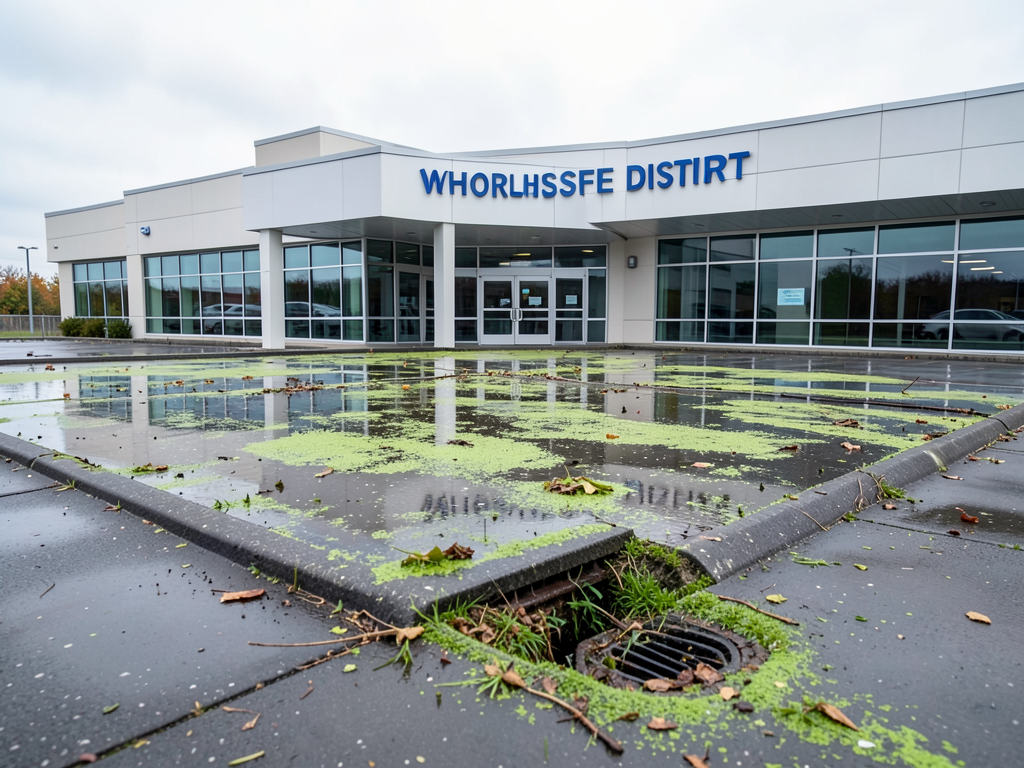
Avoiding the ponding water that ruins flat roofs on commercial buildings in the Wholesale District
Flat roofs on commercial buildings in the Wholesale District face constant water pooling problems. This standing water creates hydrostatic pressure that weakens roof membranes and leads to expensive leaks. In Indianapolis’s climate with heavy spring rains and winter freeze-thaw cycles ponding water accelerates membrane deterioration and voids manufacturer warranties.
Most Wholesale District buildings have aging flat roofs installed before modern drainage codes. These roofs lack proper slope or have clogged internal drains. Water collects in low spots and stays there for days. The weight of this water stresses the roof deck and creates perfect conditions for algae and mosquito breeding. In winter trapped water freezes and expands cracking the roofing material. How to navigate a roofing insurance claim in Brownsburg without the headache.
The solution starts with proper drainage design. A flat roof needs at least 1/4 inch of slope per foot to shed water. Most Wholesale District buildings need complete drainage system upgrades including new internal drains tapered insulation or added scuppers. Without these improvements every heavy rain creates the same ponding problem.
Call (317) 703-7557 today to schedule your inspection before the next storm hits.
Common drainage failures in Wholesale District buildings
Wholesale District commercial buildings share several drainage problems. Many have original 1970s-1980s flat roofs with internal drains that clog easily. The area’s mature trees drop leaves and debris that block drain strainers. When drains clog water has nowhere to go.
Another issue is inadequate roof slope. Many buildings were constructed with dead-flat decks to maximize interior space. Without positive drainage water always finds the lowest point. These low areas often form near rooftop equipment or where the roof meets parapet walls.
Freeze-thaw damage hits Wholesale District buildings hard. Water trapped in cracks freezes overnight expands and breaks apart the roofing material. This cycle repeats all winter creating larger cracks each time. By spring these cracks allow water into the building. Roofing Beech Grove.
IMAGE_PLACEHOLDER_1 – Photo showing ponding water on a Wholesale District flat roof with visible algae growth and debris around a clogged drain.
Four proven drainage solutions for Wholesale District flat roofs
Choosing the right drainage system depends on your building’s structure and budget. Here are four solutions that work in the Wholesale District’s climate and building conditions.
Interior roof drains collect water through a network of pipes below the roof deck. These work well for large buildings but need regular cleaning to prevent clogs. In the Wholesale District many buildings have 4-inch drains that should be upgraded to 6-inch to handle heavy rain.
Scuppers are openings in parapet walls that allow water to drain off the roof edge. They work best when combined with conductor heads and downspouts. Scuppers rarely clog and provide overflow protection if primary drains fail. Wholesale District buildings often need larger scuppers to handle Indiana’s heavy rainfall.
Gutters and downspouts collect water at the roof edge and channel it to grade. This system works for smaller buildings but needs frequent cleaning in the Wholesale District’s leafy neighborhoods. Ice buildup in winter can pull gutters away from the building.
Siphonic drainage systems use special roof outlets that create a vacuum effect pulling water off the roof faster than gravity alone. These systems can handle extreme rainfall and work well for large Wholesale District warehouses. They cost more upfront but prevent ponding damage.
Comparing drainage system performance
| System Type | Initial Cost | Maintenance Needs | Freeze Protection | Best For |
|---|---|---|---|---|
| Interior Drains | Medium | High – clean quarterly | Moderate – heat trace needed | Large buildings |
| Scuppers | Low-Medium | Low – clean annually | High – no freezing inside | Buildings with parapet walls |
| Gutters/Downspouts | Low | High – clean seasonally | Low – ice damage common | Small buildings |
| Siphonic Systems | High | Low – self-cleaning design | High – rapid drainage | Large warehouses |
Creating positive slope with tapered insulation
Most Wholesale District buildings need added slope to achieve proper drainage. Tapered insulation provides the easiest solution. This rigid foam board comes in different thicknesses that create a gradual slope when installed correctly.
The standard approach uses 1/2-inch per foot minimum slope. For a 50-foot wide roof that means 25 inches of total drop from high to low point. Tapered insulation panels are custom cut to achieve this slope profile. The insulation also provides R-value for energy efficiency.
Installation requires careful planning. The high point usually sits near the building center with slope falling toward all edges. Drain locations determine the low points. In Wholesale District buildings we often need to relocate existing drains to work with the new tapered system.
The tapered system must integrate with existing roof penetrations like HVAC units and vents. Custom crickets and saddles divert water around these obstacles. Without proper detailing water ponds around equipment and causes leaks.
IMAGE_PLACEHOLDER_2 – Diagram showing how tapered insulation creates positive slope on a flat roof with drain locations and cricket details around rooftop equipment.
Wholesale District building code requirements
Marion County requires all flat roofs to meet specific drainage standards. The Indiana Plumbing Code mandates that roof drains handle the 100-year storm event. For Indianapolis this means drains must pass 6 inches of rain in 24 hours.
Section 1106.3 of the Indiana Plumbing Code requires secondary overflow drains or scuppers when the roof area exceeds 200 square feet. These prevent catastrophic flooding if primary drains clog. Wholesale District buildings built before 2010 often lack this required overflow protection.
Ice barrier requirements under Section R905.1.2 mandate self-adhering polymer-modified bitumen at roof eaves. This prevents ice dams from backing up under roofing materials. Wholesale District buildings need this protection due to Indiana’s severe winter weather.
Building permits require engineered drainage calculations. These show pipe sizes slope calculations and rainfall handling capacity. Without proper engineering the city will not issue permits for drainage modifications.
Call (317) 703-7557 today to schedule your inspection before the next storm hits.
Seasonal maintenance for Wholesale District flat roofs
Wholesale District buildings need different maintenance tasks each season. Fall maintenance prevents winter ponding problems. Before leaves drop clean all drains and scuppers. Remove debris from roof surface. Check that downspouts extend at least 5 feet from the building.
Winter maintenance focuses on ice prevention. After heavy snow check that roof drains remain clear. Ice buildup around drains indicates poor insulation or ventilation. Heat cables may be needed in problem areas.
Spring maintenance addresses winter damage. Check for cracked membranes around drains and scuppers. Look for ponding water that indicates settled insulation. Clean all drainage components thoroughly.
Summer maintenance involves checking for vegetation growth in drainage areas. Small plants take root in debris and block water flow. Trim any tree branches that hang over the roof.
Seasonal Maintenance Checklist
- Clean all roof drains and strainers
- Inspect scuppers for debris and damage
- Check downspout connections and extensions
- Examine roof surface for ponding areas
- Test overflow drains for proper function
- Inspect roof edges for ice dam formation
- Check HVAC equipment for proper drainage
- Examine flashing details around penetrations
Cost factors and ROI for drainage improvements
Wholesale District drainage projects vary in cost based on building size and existing conditions. A basic drain cleaning and inspection costs $500-1000. Complete drainage system replacement ranges from $8-15 per square foot. The honest cost of a full roof replacement in Indianapolis for 2026.
Tapered insulation installation adds $3-6 per square foot. This includes removing old insulation installing new tapered panels and re-roofing. For a 10000 square foot roof expect $80000-150000 total cost.
Siphonic systems cost $12-20 per square foot but handle extreme rainfall better. These systems reduce long-term maintenance costs and prevent expensive interior damage from ponding water.
ROI comes from extended roof life and prevented damage. Proper drainage can extend membrane life by 10-15 years. Preventing one major leak can save $50000 in interior repairs and business interruption.
Insurance companies may offer premium discounts for buildings with upgraded drainage systems. Some policies require proper drainage to maintain coverage.
Emergency response for Wholesale District buildings
When ponding water causes active leaks quick action prevents major damage. First identify the leak source using moisture meters and thermal imaging. Mark the affected area clearly.
Emergency tarping provides temporary protection. Use 20-mil reinforced polyethylene tarps secured with 2×4 lumber. Extend tarps at least 5 feet beyond the leak area. This buys time for permanent repairs. Getting emergency roof repairs in Broad Ripple before the next big rain.
Internal drain failures require immediate attention. Remove drain domes and clean strainers. If the drain line is clogged use a plumber’s snake to clear the blockage. Never use chemical drain cleaners on roof drains – they damage roofing materials.
Scupper overflow indicates a serious problem. Check that primary drains are clear. If scuppers are overflowing during normal rain the roof has inadequate drainage capacity. This requires immediate professional evaluation.
Emergency Response Steps
- Identify leak location and extent
- Place buckets or containers to catch water
- Remove debris from drains if safe to do so
- Apply emergency tarping to affected area
- Document damage with photos
- Contact roofing professional immediately
- Notify insurance company if damage is extensive
Choosing the right contractor for Wholesale District projects
Wholesale District buildings need contractors with specific experience. Look for companies that have completed similar projects in the area. Ask for references from other Wholesale District property managers.
Verify contractor licensing and insurance. Marion County requires roofing contractors to carry $500000 liability insurance and workers’ compensation. Ask to see current certificates.
Check for manufacturer certifications. Major roofing manufacturers train contractors on proper installation of their drainage products. Certified contractors understand warranty requirements and installation best practices.
Ask about project timeline and disruption. Wholesale District buildings often cannot close during repairs. The contractor should explain how they will maintain building operations during the project. Should you choose cedar shake or asphalt for your Meridian-Kessler home?.
Get detailed proposals that include scope of work materials specifications and payment schedule. Vague proposals lead to change orders and cost overruns.
Frequently Asked Questions
How much slope does a flat roof need to prevent ponding?
A flat roof needs minimum 1/4 inch of slope per foot to shed water properly. For a 50-foot wide roof that equals 12.5 inches of total drop. Without this slope water ponds in low areas.
How often should Wholesale District flat roof drains be cleaned?
Clean roof drains quarterly in Wholesale District buildings. Fall and spring cleanings are critical due to leaf debris. Check drains monthly during rainy season and after storms.
What causes ice dams on flat roofs in Indianapolis?
Ice dams form when warm air from the building melts snow on the roof surface. This water runs to cold roof edges and refreezes. Poor insulation and ventilation cause this temperature difference.
Can ponding water void my roof warranty?
Yes. Most roofing manufacturers void warranties if water ponds for more than 48 hours. Ponding water indicates installation defects or inadequate drainage design.
How do I know if my building needs tapered insulation?
If your roof has ponding water after rain lacks positive slope or was built before 2000 you likely need tapered insulation. A professional inspection can confirm this need.
Call (317) 703-7557 today to schedule your inspection before the next storm hits.
You may also find this helpful. Protecting your retail inventory from roof leaks during the heavy thunderstorms in Mass Ave and Fountain Square.
You may also find this helpful. Why your Stadium Village warehouse needs better roof scuppers to handle heavy downpours.
{
“@context”: “https://schema.org”,
“@type”: “BlogPosting”,
“headline”: “Avoiding the ponding water that ruins flat roofs on commercial buildings in the Wholesale District”,
“description”: “Stop ponding water from destroying your Wholesale District flat roof. Learn drainage solutions, code requirements, and emergency fixes to protect your building.”,
“wordCount”: 1865,
“datePublished”: “2026-05-05T12:02:00.000Z”,
“dateModified”: “2026-05-05T12:02:00.000Z”,
“inLanguage”: “en-US”,
“mainEntityOfPage”: {
“@type”: “WebPage”,
“@id”: “https://eliteroofingindianapolis.com”
},
“publisher”: {
“@type”: “LocalBusiness”,
“name”: “Elite Roofing Indianapolis”,
“url”: “https://eliteroofingindianapolis.com”
},
“author”: {
“@type”: “Organization”,
“name”: “Elite Roofing Indianapolis”,
“url”: “https://eliteroofingindianapolis.com”
},
“image”: {
“@type”: “ImageObject”,
“url”: “https://eliteroofingindianapolis.com/wp-content/uploads/2026/03/avoiding-the-ponding-water-that-ruins-flat-roofs-o-1.png”
}
}
{
“@context”: “https://schema.org”,
“@type”: “RoofingContractor”,
“name”: “Elite Roofing Indianapolis”,
“url”: “https://eliteroofingindianapolis.com”,
“address”: {
“@type”: “PostalAddress”,
“addressLocality”: “Indianapolis”
},
“areaServed”: {
“@type”: “City”,
“name”: “Indianapolis”
}
}
{
“@context”: “https://schema.org”,
“@type”: “FAQPage”,
“mainEntity”: [
{
“@type”: “Question”,
“name”: “How much slope does a flat roof need to prevent ponding?”,
“acceptedAnswer”: {
“@type”: “Answer”,
“text”: “A flat roof needs minimum 1/4 inch of slope per foot to shed water properly. For a 50-foot wide roof that equals 12.5 inches of total drop. Without this slope water ponds in low areas.”
}
},
{
“@type”: “Question”,
“name”: “How often should Wholesale District flat roof drains be cleaned?”,
“acceptedAnswer”: {
“@type”: “Answer”,
“text”: “Clean roof drains quarterly in Wholesale District buildings. Fall and spring cleanings are critical due to leaf debris. Check drains monthly during rainy season and after storms.”
}
},
{
“@type”: “Question”,
“name”: “What causes ice dams on flat roofs in Indianapolis?”,
“acceptedAnswer”: {
“@type”: “Answer”,
“text”: “Ice dams form when warm air from the building melts snow on the roof surface. This water runs to cold roof edges and refreezes. Poor insulation and ventilation cause this temperature difference.”
}
},
{
“@type”: “Question”,
“name”: “Can ponding water void my roof warranty?”,
“acceptedAnswer”: {
“@type”: “Answer”,
“text”: “Yes. Most roofing manufacturers void warranties if water ponds for more than 48 hours. Ponding water indicates installation defects or inadequate drainage design.”
}
},
{
“@type”: “Question”,
“name”: “How do I know if my building needs tapered insulation?”,
“acceptedAnswer”: {
“@type”: “Answer”,
“text”: “If your roof has ponding water after rain lacks positive slope or was built before 2000 you likely need tapered insulation. A professional inspection can confirm this need.”
}
}
]
}
{
“@context”: “https://schema.org”,
“@type”: “BreadcrumbList”,
“itemListElement”: [
{
“@type”: “ListItem”,
“position”: 1,
“name”: “Home”,
“item”: “https://eliteroofingindianapolis.com”
},
{
“@type”: “ListItem”,
“position”: 2,
“name”: “Blog”,
“item”: “https://eliteroofingindianapolis.com/blog”
},
{
“@type”: “ListItem”,
“position”: 3,
“name”: “Avoiding the ponding water that ruins flat roofs on commercial buildings in the Wholesale District”
}
]
}
{
“@context”: “https://schema.org”,
“@type”: “Service”,
“serviceType”: “Roofing”,
“provider”: {
“@type”: “LocalBusiness”,
“name”: “Elite Roofing Indianapolis”,
“url”: “https://eliteroofingindianapolis.com”
},
“areaServed”: {
“@type”: “City”,
“name”: “Indianapolis”
},
“description”: “Stop ponding water from destroying your Wholesale District flat roof. Learn drainage solutions, code requirements, and emergency fixes to protect your building.”
}