
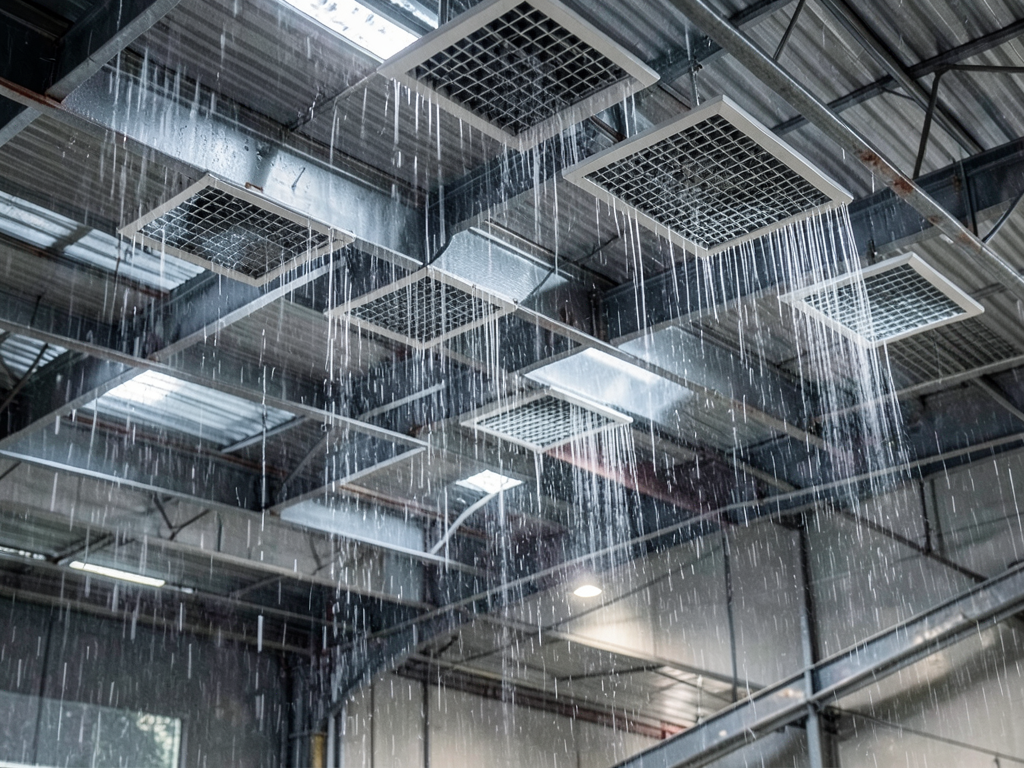
Why your Stadium Village warehouse needs better roof scuppers to handle heavy downpours
Heavy downpours overwhelm Stadium Village warehouses every spring. Water backs up on flat roofs when scuppers clog or fail to handle peak flow. The result is expensive interior damage, mold growth, and business interruption. Proper scupper sizing and installation prevent these problems before they start.
Stadium Village’s industrial buildings sit in a low-lying area near White River. Combined with aging drainage systems and increasing storm intensity, this creates a perfect storm for water damage. Warehouses here need scuppers that can handle 100-year storm events, not just average rainfall.
How Stadium Village’s flat roofs trap water without proper scuppers
Flat commercial roofs in Stadium Village lack the slope of residential buildings. Without adequate drainage, water pools and creates hydrostatic pressure. This pressure forces water through seams, flashing, and even small cracks in the membrane.
The area’s clay-heavy soil also affects drainage. Expansive Indiana clay expands when wet, creating upward pressure on foundations. This movement can crack parapet walls and misalign scuppers, creating gaps where water enters.
Stadium Village warehouses often feature modified bitumen or TPO membranes. These materials need proper scupper flashing to maintain watertight integrity. Poor installation allows water to wick under the membrane, causing delamination and interior damage.
Scupper sizing calculations for Indiana’s intense storms
Marion County building codes require commercial roofs to handle specific rainfall intensities. The current standard is 2 inches per hour for a 100-year storm event. This translates to specific flow rates that determine scupper size.
A 12-inch wide scupper handles approximately 200 gallons per minute. Most Stadium Village warehouses need multiple scuppers to meet code requirements. The exact number depends on roof area and local rainfall data.
Overflow scuppers provide backup protection. These sit higher in the parapet wall and activate when primary scuppers reach capacity. Without them, water can rise to dangerous levels and breach the roof system.
Common scupper failure points in Indianapolis warehouses
Ice formation during freeze-thaw cycles creates the most common failure. Water trapped in scuppers freezes and expands, cracking the metal or splitting seams. This damage often goes unnoticed until spring rains arrive.</p
Debris accumulation blocks water flow. Leaves, trash, and even small animals nest in scuppers during dry periods. When storms hit, blocked scuppers overflow and direct water onto walls instead of away from the building.
Metal scupper corrosion accelerates in Stadium Village’s high humidity. Salt from winter road treatments accelerates deterioration. Galvanized steel scuppers last 15-20 years, while aluminum versions resist corrosion better in this environment.
Material options for long-lasting commercial scuppers
Aluminum scuppers resist corrosion and handle temperature extremes well. They cost more upfront but last longer than steel in Indiana’s climate. The material’s light weight also reduces stress on parapet walls.
Copper scuppers develop a protective patina and can last 50+ years. The initial investment is high, but warehouses planning to stay in Stadium Village long-term benefit from copper’s durability.
Stainless steel offers excellent corrosion resistance but costs significantly more. It works well in areas near chemical storage or where de-icing salts are heavily used.
Installation techniques that prevent future leaks
Proper flashing integration is critical. Scuppers must tie into the roof membrane with compatible materials. EPDM roofs need EPDM-compatible flashing; TPO needs TPO-compatible materials. Mismatched materials create weak points.
Expansion joints accommodate building movement. Indiana’s temperature swings cause materials to expand and contract. Scuppers without proper joints develop stress cracks over time.
Sealant selection matters. Silicone sealants handle UV exposure better than polyurethane in our climate. They maintain flexibility through temperature extremes, preventing adhesion failure.
Maintenance schedule to protect your investment
Quarterly inspections catch problems early. Check for debris, ice buildup, and corrosion. Pay special attention after major storms or freeze-thaw cycles.
Annual professional cleaning removes accumulated debris. This service includes checking sealant integrity and testing overflow functionality.
Post-storm inspections identify damage from hail or high winds. Small issues caught early prevent major failures later.
Cost factors for scupper replacement in Stadium Village
Material costs vary significantly. Basic galvanized steel starts around $50 per linear foot. Aluminum runs $75-100 per foot. Copper can exceed $200 per foot.
Labor costs depend on accessibility and existing conditions. Warehouses with limited roof access or severe deterioration need more labor hours.
Permitting adds time and cost. Marion County requires permits for structural modifications to parapet walls. Plan for 2-3 week approval times.
Emergency response when scuppers fail
Immediate tarping prevents interior damage. Our crews carry commercial-grade tarps and can secure them within hours of your call.
Water extraction equipment removes standing water from interiors. Quick response limits mold growth and material damage.
Temporary scupper installation provides immediate drainage. This solution works until permanent repairs can be completed. EPA National Pollutant Discharge Elimination System.
Why DIY scupper repairs cost more long-term
Inexperienced repairs often use incompatible materials. This creates new leak points where different metals contact or sealants fail prematurely.
Improper flashing integration voids roof warranties. Most manufacturers require certified installers for warranty coverage.
Code violations lead to failed inspections and costly rework. Marion County inspectors check drainage compliance during commercial building inspections.
Energy efficiency benefits of proper scupper systems
Water-logged roof insulation loses R-value. Proper drainage keeps insulation dry and maintains energy efficiency.
Ice buildup increases HVAC loads. Heated buildings work harder when ice dams form near scuppers.
Moisture intrusion damages interior finishes. Preventing leaks maintains building envelope integrity and reduces energy loss.
Integration with other drainage systems
Scuppers work with internal drains and downspouts. A comprehensive drainage plan routes water through multiple paths to prevent overload.
Parapet wall design affects scupper performance. Walls must provide adequate support and proper flashing integration points.
Roof slope determines water flow rates. Even small slope adjustments improve drainage efficiency and reduce scupper load.
Future-proofing your Stadium Village warehouse
Climate change increases storm intensity. Designing scuppers for current codes may not provide adequate protection in 5-10 years.
Building additions affect drainage calculations. Expanding your warehouse changes water volume requirements for existing scuppers.
Technology improvements offer better materials. New sealants and flashing products provide longer service life and better performance.
Insurance considerations for scupper maintenance
Most commercial policies exclude wear-and-tear damage. Regular maintenance proves due diligence if claims arise. Preventative Roof Maintenance Plans.
Documentation protects your interests. Keep records of inspections, repairs, and material specifications.
Premium discounts may apply for preventive maintenance programs. Some insurers reward proactive building management.
Environmental impact of proper drainage
Controlled runoff prevents soil erosion around foundations. This protects landscaping and prevents foundation settlement.
Reduced chemical runoff benefits local waterways. Proper drainage keeps roof contaminants from entering storm sewers.
Extended roof life reduces landfill waste. Preventing premature roof replacement conserves materials and reduces environmental impact. The honest cost of a full roof replacement in Indianapolis for 2026.
Frequently Asked Questions
How often should warehouse scuppers be inspected?
Quarterly inspections catch problems early. Increase frequency to monthly during fall when leaves accumulate or after major storms.
What’s the average lifespan of commercial scuppers?
Galvanized steel lasts 15-20 years. Aluminum versions reach 25-30 years. Copper scuppers can function for 50+ years with proper maintenance.
Can I add scuppers to an existing warehouse?
Yes, but structural analysis is required first. Parapet walls must support the additional load and provide proper flashing integration points.
How much does scupper replacement cost?
Basic replacements start around $1,500-2,000 per scupper including materials and labor. Complex installations with custom flashing can exceed $5,000 per unit.
Will new scuppers affect my roof warranty?
Proper installation by certified contractors maintains warranty coverage. Using manufacturer-approved materials and techniques is essential for warranty compliance. For more information, visit International Building Code Chapter 15.
You may also find this helpful. Deciding between a roof coating or a full replacement for your Park 100 warehouse.
{
“@context”: “https://schema.org”,
“@type”: “BlogPosting”,
“headline”: “Why your Stadium Village warehouse needs better roof scuppers to handle heavy downpours”,
“description”: “Heavy rain overwhelms Stadium Village warehouses. Learn how proper scupper sizing, installation, and maintenance prevent costly water damage. Call (317) 703-7557.”,
“wordCount”: 1269,
“datePublished”: “2026-05-23T15:50:00.000Z”,
“dateModified”: “2026-05-23T15:50:00.000Z”,
“inLanguage”: “en-US”,
“mainEntityOfPage”: {
“@type”: “WebPage”,
“@id”: “https://eliteroofingindianapolis.com”
},
“publisher”: {
“@type”: “LocalBusiness”,
“name”: “Elite Roofing Indianapolis”,
“url”: “https://eliteroofingindianapolis.com”
},
“author”: {
“@type”: “Organization”,
“name”: “Elite Roofing Indianapolis”,
“url”: “https://eliteroofingindianapolis.com”
},
“image”: {
“@type”: “ImageObject”,
“url”: “https://eliteroofingindianapolis.com/wp-content/uploads/2026/03/why-your-stadium-village-warehouse-needs-better-ro-1.png”
}
}
{
“@context”: “https://schema.org”,
“@type”: “RoofingContractor”,
“name”: “Elite Roofing Indianapolis”,
“url”: “https://eliteroofingindianapolis.com”,
“address”: {
“@type”: “PostalAddress”,
“addressLocality”: “Indianapolis”
},
“areaServed”: {
“@type”: “City”,
“name”: “Indianapolis”
}
}
{
“@context”: “https://schema.org”,
“@type”: “FAQPage”,
“mainEntity”: [
{
“@type”: “Question”,
“name”: “How often should warehouse scuppers be inspected?”,
“acceptedAnswer”: {
“@type”: “Answer”,
“text”: “Quarterly inspections catch problems early. Increase frequency to monthly during fall when leaves accumulate or after major storms.”
}
},
{
“@type”: “Question”,
“name”: “What’s the average lifespan of commercial scuppers?”,
“acceptedAnswer”: {
“@type”: “Answer”,
“text”: “Galvanized steel lasts 15-20 years. Aluminum versions reach 25-30 years. Copper scuppers can function for 50+ years with proper maintenance.”
}
},
{
“@type”: “Question”,
“name”: “Can I add scuppers to an existing warehouse?”,
“acceptedAnswer”: {
“@type”: “Answer”,
“text”: “Yes, but structural analysis is required first. Parapet walls must support the additional load and provide proper flashing integration points.”
}
},
{
“@type”: “Question”,
“name”: “How much does scupper replacement cost?”,
“acceptedAnswer”: {
“@type”: “Answer”,
“text”: “Basic replacements start around $1,500-2,000 per scupper including materials and labor. Complex installations with custom flashing can exceed $5,000 per unit.”
}
},
{
“@type”: “Question”,
“name”: “Will new scuppers affect my roof warranty?”,
“acceptedAnswer”: {
“@type”: “Answer”,
“text”: “Proper installation by certified contractors maintains warranty coverage. Using manufacturer-approved materials and techniques is essential for warranty compliance. For more information, visit International Building Code Chapter 15.”
}
}
]
}
{
“@context”: “https://schema.org”,
“@type”: “BreadcrumbList”,
“itemListElement”: [
{
“@type”: “ListItem”,
“position”: 1,
“name”: “Home”,
“item”: “https://eliteroofingindianapolis.com”
},
{
“@type”: “ListItem”,
“position”: 2,
“name”: “Blog”,
“item”: “https://eliteroofingindianapolis.com/blog”
},
{
“@type”: “ListItem”,
“position”: 3,
“name”: “Why your Stadium Village warehouse needs better roof scuppers to handle heavy downpours”
}
]
}
{
“@context”: “https://schema.org”,
“@type”: “Service”,
“serviceType”: “Roofing”,
“provider”: {
“@type”: “LocalBusiness”,
“name”: “Elite Roofing Indianapolis”,
“url”: “https://eliteroofingindianapolis.com”
},
“areaServed”: {
“@type”: “City”,
“name”: “Indianapolis”
},
“description”: “Heavy rain overwhelms Stadium Village warehouses. Learn how proper scupper sizing, installation, and maintenance prevent costly water damage. Call (317) 703-7557.”
}