
Does a metal roof really sound like a drum set during a McCordsville rainstorm?
The short answer is no. A properly installed metal roof in McCordsville sounds more like gentle rain on a window than a drum solo. The real factors that control noise are attic insulation, solid roof decking, and quality underlayment. Here in Indiana, where spring storms can be intense, those details make all the difference.. Read more about Restoring the character of metal porch roofs on historic Near Northside homes.
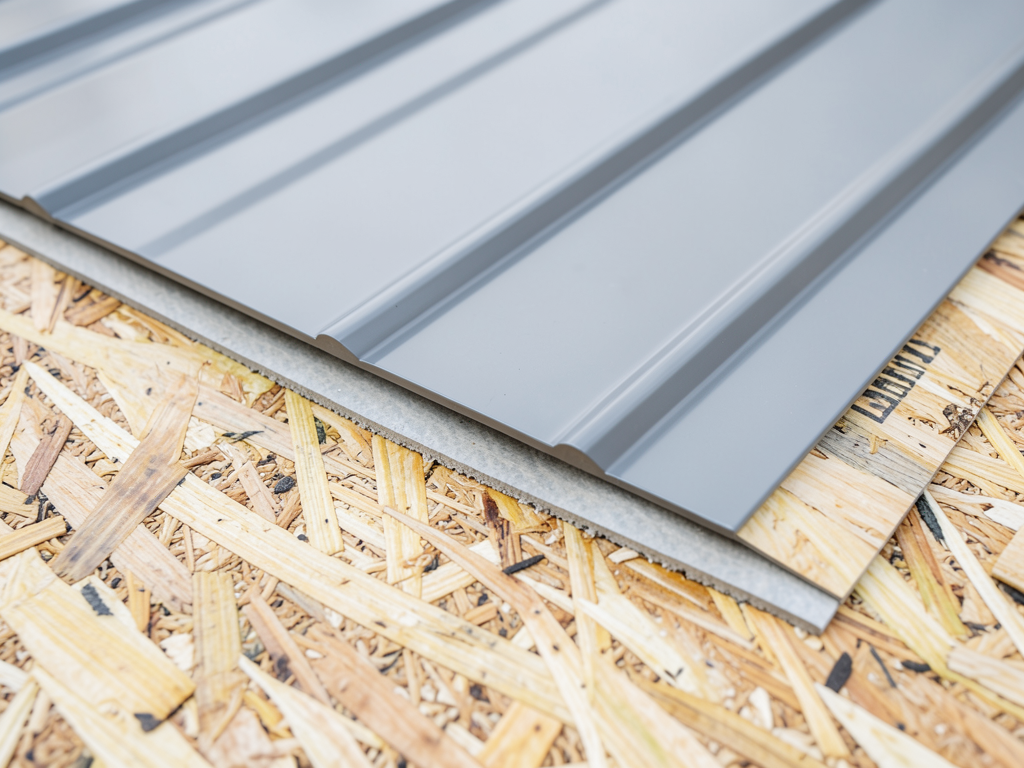
Many homeowners worry about the noise before they ever see a metal roof installed. The fear comes from old stories about barns and sheds with exposed metal panels. Those structures had no insulation or underlayment, so every raindrop echoed through the space. Modern residential metal roofs are completely different. They sit on solid plywood or OSB sheathing, with high-R-value insulation above the ceiling, and synthetic underlayment underneath. That layered system absorbs and deadens sound before it ever reaches your living space.
Let me show you exactly what happens when rain hits a metal roof in an Indianapolis home:
Rain hits the metal panel at about 70 miles per hour in a heavy storm. The sound travels down through the panel, but instead of bouncing around in an open attic, it hits a solid layer of plywood. That plywood vibrates slightly, but the vibration is absorbed by the insulation above your ceiling. The underlayment beneath the metal adds another barrier. By the time the sound reaches your interior, it is reduced to about 40-50 decibels, roughly the level of light rainfall on an asphalt shingle. The best asphalt shingle brands for Greenwood homes (and why they matter).
For comparison, here are typical sound levels for common rain events on different roofing materials: How to navigate a roofing insurance claim in Brownsburg without the headache.
| Roofing Material | Heavy Rain (dB) | Light Rain (dB) | Sound Comparison |
|---|---|---|---|
| Standing Seam Metal | 45-55 | 35-40 | Light rainfall on a window |
| Asphalt Shingle | 40-50 | 30-35 | Soft shower on a tent |
| Corrugated Metal (open framing) | 70-80 | 50-60 | Drumming on a tin can |
The big difference is in the installation. A standing seam metal roof on solid decking with R-38 insulation performs almost identically to asphalt in terms of sound. A corrugated roof nailed to open purlins with no underlayment is where the “drum” effect comes from.
Three factors determine how quiet your metal roof will be during a McCordsville storm:
- Roof Decking. Solid plywood or OSB sheathing stops vibration. Open framing or purlins let sound travel.
- Underlayment. High-temperature ice and water shield or synthetic felt adds a sound-deadening layer under the metal.
- Attic Insulation. The higher the R-value, the more sound absorption. R-38 to R-49 is standard in Indiana for both energy efficiency and noise control.
Indianapolis weather makes these details even more important. We get heavy spring thunderstorms, summer microbursts, and winter ice storms. All of those events produce varying rain intensities. A roof that handles light rain well might still be noisy in a downpour if it lacks solid decking or adequate insulation.
Standing seam systems are generally quieter than corrugated screw-down panels. The reason is thermal expansion. Standing seam panels clip to the roof deck, allowing them to expand and contract without popping. Screw-down panels are nailed through the metal into the deck. When the sun heats the panel, it expands and pushes against the screw, creating a small “pop” that can sound like a knock in your attic. Over years, that noise can become noticeable.
During installation, we use several techniques to eliminate noise:
- Install solid OSB or plywood over rafters.
- Apply synthetic underlayment rated for high temperatures.
- Use sound-rated insulation batts or blown-in fiberglass.
- Space fasteners to allow thermal movement without binding.
- Seal all penetrations to prevent wind-driven rain from entering the attic.
We also follow Marion County building codes for ice barriers and underlayment. Section R905.1.2 of the Indiana Residential Code requires ice and water shield along eaves in our climate zone. That barrier also helps with sound reduction.
Hail is another concern. Metal roofs can be noisy during hail if the panels are thin. We install 24- or 26-gauge steel with a textured finish that breaks up the impact sound. The solid decking beneath stops any vibration from reaching your ceiling. In most cases, hail on a properly installed metal roof sounds like gravel rolling across the surface, not like rocks hitting a drum.
If you are considering metal for your McCordsville home, the noise level should not be a deal-breaker. The combination of solid sheathing, high-R insulation, and quality underlayment makes modern metal roofs as quiet as asphalt. The bigger benefits are longevity, wind resistance, and energy savings. A metal roof can last 40-70 years versus 20-25 for asphalt, and it reflects solar heat, reducing cooling costs in our hot Indiana summers. Should you choose cedar shake or asphalt for your Meridian-Kessler home?.
Call (317) 703-7557 today to schedule your inspection. We will measure your attic insulation, check your decking, and give you a clear comparison of sound levels so you can make an informed decision before the next storm hits.
Frequently Asked Questions
Will a metal roof make my house hotter in summer?
No. Metal roofs with reflective coatings actually reduce heat gain by reflecting solar radiation. When combined with proper attic insulation, they can lower cooling costs by 10-25 percent in Indiana summers.
Can I install a metal roof over my existing shingles?
Yes, if the existing roof is a single layer and in good condition. Installing over shingles adds another sound barrier. However, we recommend removing old shingles if they are curled or damaged to ensure a flat surface for the new metal.
How does metal hold up in Indiana winters?
Very well. Metal sheds snow and ice faster than asphalt, reducing the risk of ice dams. The slick surface allows snow to slide off in sheets, which is why we install snow guards on eaves to control the fall.
What about lightning strikes?
Metal conducts electricity but does not attract lightning. If struck, the current travels safely to the ground through the building’s grounding system. Metal roofs are no more likely to be hit than any other roofing material. Roofing Beech Grove.
How much does a metal roof cost in Indianapolis?
Prices vary by style and home size, but expect to pay 1.5 to 2 times the cost of asphalt. The higher upfront cost is offset by longer lifespan and energy savings over 40-70 years.
Is the noise worse during hail storms?
Not if the roof is installed correctly. High-quality metal with solid decking and insulation absorbs hail impact sound. Most homeowners describe it as a soft tapping, similar to gravel on a driveway.
Can I walk on a metal roof for maintenance?
Yes, but use caution. Metal can be slippery when wet or covered in frost. Wear soft-soled shoes and step on the flat areas between ribs. Avoid stepping on the seams to prevent denting.
How do I know if my attic insulation is enough?
Indiana building code requires R-49 in attics for new construction. If your insulation is below that level, adding more will improve both energy efficiency and sound dampening. We can measure it during an inspection.
What style of metal roof is quietest?
Standing seam is the quietest because the panels are not nailed through the metal. The clip system allows thermal movement without the popping sounds common in screw-down corrugated panels.
How long does installation take?
Most single-family homes take 2-4 days. We work in sections to keep your home weather-tight each night. The process includes removing old roofing if needed, installing underlayment, and then laying the metal panels.. Read more about The best roofing options for detached garages and outbuildings in Wanamaker.
Will a metal roof affect my home insurance?
Many insurers offer discounts for metal roofs because of their fire resistance and wind durability. Check with your agent, but savings can range from 5-35 percent depending on the carrier.
Do metal roofs rust?
Modern metal roofs are coated with Galvalume or galvanized steel and finished with paint systems that resist corrosion for decades. In Indiana’s climate, a quality metal roof should not rust through for 50+ years.
What about color fading?
High-quality Kynar 500 or similar finishes are UV stable and carry 30-40 year warranties against fading. Darker colors may show slight lightening over time, but the change is gradual and even.
Can I install solar panels on a metal roof?
Yes. Standing seam roofs are ideal for solar because clamps attach to the seams without penetrating the panels. This preserves the roof warranty and speeds installation.
How do I clean a metal roof?
Use a garden hose and mild detergent. Avoid pressure washers, which can strip paint. Remove leaves and debris from valleys to prevent water backup. Trim overhanging branches to reduce abrasion.
What happens if a panel is damaged?
Individual panels can be replaced without disturbing the rest of the roof. Keep extra panels from the original installation for exact color matching, as paint batches can vary slightly over time.
Is a metal roof environmentally friendly?
Yes. Most metal roofing contains recycled content and is fully recyclable at the end of its life. Its long lifespan means fewer replacements and less landfill waste compared to asphalt shingles. The honest cost of a full roof replacement in Indianapolis for 2026.
Will a metal roof interfere with my Wi-Fi or cell signal?
No. Metal roofing has no measurable effect on wireless signals inside your home. Signals pass through walls and windows, not the roof structure.
What maintenance is required?
Very little. Annual visual inspections for loose fasteners, sealant checks around penetrations, and debris removal are usually enough. No periodic coating or sealing is needed on quality systems.
Can I install a metal roof in winter?
Yes, but cold weather can make some sealants less pliable. We use low-temperature adhesives and schedule work during the warmest part of the day to ensure proper adhesion.
How does wind affect a metal roof?
Properly installed metal roofs can withstand winds up to 140 mph. The interlocking panels and concealed fasteners prevent uplift better than traditional shingles in hurricane-prone areas.
What about pests like squirrels or raccoons?
Metal is impervious to rodents and larger animals. Unlike wood or asphalt, they cannot chew through it to gain entry. This adds a layer of security to your attic space.
Does the roof expand and contract much?
Metal expands about 0.3 percent over a 100-degree temperature swing. Our installation methods allow for that movement without buckling or noise. The clips and fasteners are designed to handle seasonal changes.
Can I install a skylight with a metal roof?
Yes. Skylights are flashed into the metal using welded or soldered curb details that prevent leaks. We coordinate with skylight manufacturers to ensure compatibility.
What about snow and ice sliding off?
Metal sheds snow quickly, which can be dangerous if it piles up near doorways. We install snow guards or rail systems to break up the slide and control where snow drops.
How do I choose the right color?
Consider your home’s siding, brick, and landscaping. Lighter colors reflect more heat, while darker colors hide minor scratches. We provide color samples and can show digital mockups of your home.
Will a metal roof increase my home’s value?
Yes. Buyers appreciate the durability, energy efficiency, and low maintenance. A new metal roof can add 1-6 percent to your home’s resale value, depending on the market.
What is the warranty like?
Paint finishes typically carry 30-40 year warranties. The metal itself is often covered for 40-70 years against corrosion. Workmanship warranties from the installer range from 10-25 years.
How do I get started?
Call (317) 703-7557 for a free inspection. We will assess your current roof, measure insulation, and provide a detailed estimate with sound-level comparisons so you can decide with confidence. For more information, visit EPA lead-safe practices. For more information, visit FEMA disaster preparedness.
{
“@context”: “https://schema.org”,
“@type”: “BlogPosting”,
“headline”: “Does a metal roof really sound like a drum set during a McCordsville rainstorm?”,
“description”: “Discover the truth about metal roof noise in McCordsville. Learn how attic insulation, underlayment, and installation techniques actually reduce sound during Indiana storms.”,
“wordCount”: 1978,
“datePublished”: “2026-04-10T08:06:00.000Z”,
“dateModified”: “2026-04-10T08:06:00.000Z”,
“inLanguage”: “en-US”,
“mainEntityOfPage”: {
“@type”: “WebPage”,
“@id”: “https://eliteroofingindianapolis.com”
},
“publisher”: {
“@type”: “LocalBusiness”,
“name”: “Elite Roofing Indianapolis”,
“url”: “https://eliteroofingindianapolis.com”
},
“author”: {
“@type”: “Organization”,
“name”: “Elite Roofing Indianapolis”,
“url”: “https://eliteroofingindianapolis.com”
},
“image”: {
“@type”: “ImageObject”,
“url”: “https://eliteroofingindianapolis.com/wp-content/uploads/2026/03/does-a-metal-roof-really-sound-like-a-drum-set-dur-1.png”
}
}
{
“@context”: “https://schema.org”,
“@type”: “RoofingContractor”,
“name”: “Elite Roofing Indianapolis”,
“url”: “https://eliteroofingindianapolis.com”,
“address”: {
“@type”: “PostalAddress”,
“addressLocality”: “Indianapolis”
},
“areaServed”: {
“@type”: “City”,
“name”: “Indianapolis”
}
}
{
“@context”: “https://schema.org”,
“@type”: “FAQPage”,
“mainEntity”: [
{
“@type”: “Question”,
“name”: “Will a metal roof make my house hotter in summer?”,
“acceptedAnswer”: {
“@type”: “Answer”,
“text”: “No. Metal roofs with reflective coatings actually reduce heat gain by reflecting solar radiation. When combined with proper attic insulation, they can lower cooling costs by 10-25 percent in Indiana summers.”
}
},
{
“@type”: “Question”,
“name”: “Can I install a metal roof over my existing shingles?”,
“acceptedAnswer”: {
“@type”: “Answer”,
“text”: “Yes, if the existing roof is a single layer and in good condition. Installing over shingles adds another sound barrier. However, we recommend removing old shingles if they are curled or damaged to ensure a flat surface for the new metal.”
}
},
{
“@type”: “Question”,
“name”: “How does metal hold up in Indiana winters?”,
“acceptedAnswer”: {
“@type”: “Answer”,
“text”: “Very well. Metal sheds snow and ice faster than asphalt, reducing the risk of ice dams. The slick surface allows snow to slide off in sheets, which is why we install snow guards on eaves to control the fall.”
}
},
{
“@type”: “Question”,
“name”: “What about lightning strikes?”,
“acceptedAnswer”: {
“@type”: “Answer”,
“text”: “Metal conducts electricity but does not attract lightning. If struck, the current travels safely to the ground through the building’s grounding system. Metal roofs are no more likely to be hit than any other roofing material. Roofing Beech Grove.”
}
},
{
“@type”: “Question”,
“name”: “How much does a metal roof cost in Indianapolis?”,
“acceptedAnswer”: {
“@type”: “Answer”,
“text”: “Prices vary by style and home size, but expect to pay 1.5 to 2 times the cost of asphalt. The higher upfront cost is offset by longer lifespan and energy savings over 40-70 years.”
}
},
{
“@type”: “Question”,
“name”: “Is the noise worse during hail storms?”,
“acceptedAnswer”: {
“@type”: “Answer”,
“text”: “Not if the roof is installed correctly. High-quality metal with solid decking and insulation absorbs hail impact sound. Most homeowners describe it as a soft tapping, similar to gravel on a driveway.”
}
},
{
“@type”: “Question”,
“name”: “Can I walk on a metal roof for maintenance?”,
“acceptedAnswer”: {
“@type”: “Answer”,
“text”: “Yes, but use caution. Metal can be slippery when wet or covered in frost. Wear soft-soled shoes and step on the flat areas between ribs. Avoid stepping on the seams to prevent denting.”
}
},
{
“@type”: “Question”,
“name”: “How do I know if my attic insulation is enough?”,
“acceptedAnswer”: {
“@type”: “Answer”,
“text”: “Indiana building code requires R-49 in attics for new construction. If your insulation is below that level, adding more will improve both energy efficiency and sound dampening. We can measure it during an inspection.”
}
},
{
“@type”: “Question”,
“name”: “What style of metal roof is quietest?”,
“acceptedAnswer”: {
“@type”: “Answer”,
“text”: “Standing seam is the quietest because the panels are not nailed through the metal. The clip system allows thermal movement without the popping sounds common in screw-down corrugated panels.”
}
},
{
“@type”: “Question”,
“name”: “How long does installation take?”,
“acceptedAnswer”: {
“@type”: “Answer”,
“text”: “Most single-family homes take 2-4 days. We work in sections to keep your home weather-tight each night. The process includes removing old roofing if needed, installing underlayment, and then laying the metal panels.”
}
},
{
“@type”: “Question”,
“name”: “Will a metal roof affect my home insurance?”,
“acceptedAnswer”: {
“@type”: “Answer”,
“text”: “Many insurers offer discounts for metal roofs because of their fire resistance and wind durability. Check with your agent, but savings can range from 5-35 percent depending on the carrier.”
}
},
{
“@type”: “Question”,
“name”: “Do metal roofs rust?”,
“acceptedAnswer”: {
“@type”: “Answer”,
“text”: “Modern metal roofs are coated with Galvalume or galvanized steel and finished with paint systems that resist corrosion for decades. In Indiana’s climate, a quality metal roof should not rust through for 50+ years.”
}
},
{
“@type”: “Question”,
“name”: “What about color fading?”,
“acceptedAnswer”: {
“@type”: “Answer”,
“text”: “High-quality Kynar 500 or similar finishes are UV stable and carry 30-40 year warranties against fading. Darker colors may show slight lightening over time, but the change is gradual and even.”
}
},
{
“@type”: “Question”,
“name”: “Can I install solar panels on a metal roof?”,
“acceptedAnswer”: {
“@type”: “Answer”,
“text”: “Yes. Standing seam roofs are ideal for solar because clamps attach to the seams without penetrating the panels. This preserves the roof warranty and speeds installation.”
}
},
{
“@type”: “Question”,
“name”: “How do I clean a metal roof?”,
“acceptedAnswer”: {
“@type”: “Answer”,
“text”: “Use a garden hose and mild detergent. Avoid pressure washers, which can strip paint. Remove leaves and debris from valleys to prevent water backup. Trim overhanging branches to reduce abrasion.”
}
},
{
“@type”: “Question”,
“name”: “What happens if a panel is damaged?”,
“acceptedAnswer”: {
“@type”: “Answer”,
“text”: “Individual panels can be replaced without disturbing the rest of the roof. Keep extra panels from the original installation for exact color matching, as paint batches can vary slightly over time.”
}
},
{
“@type”: “Question”,
“name”: “Is a metal roof environmentally friendly?”,
“acceptedAnswer”: {
“@type”: “Answer”,
“text”: “Yes. Most metal roofing contains recycled content and is fully recyclable at the end of its life. Its long lifespan means fewer replacements and less landfill waste compared to asphalt shingles. The honest cost of a full roof replacement in Indianapolis for 2026.”
}
},
{
“@type”: “Question”,
“name”: “Will a metal roof interfere with my Wi-Fi or cell signal?”,
“acceptedAnswer”: {
“@type”: “Answer”,
“text”: “No. Metal roofing has no measurable effect on wireless signals inside your home. Signals pass through walls and windows, not the roof structure.”
}
},
{
“@type”: “Question”,
“name”: “What maintenance is required?”,
“acceptedAnswer”: {
“@type”: “Answer”,
“text”: “Very little. Annual visual inspections for loose fasteners, sealant checks around penetrations, and debris removal are usually enough. No periodic coating or sealing is needed on quality systems.”
}
},
{
“@type”: “Question”,
“name”: “Can I install a metal roof in winter?”,
“acceptedAnswer”: {
“@type”: “Answer”,
“text”: “Yes, but cold weather can make some sealants less pliable. We use low-temperature adhesives and schedule work during the warmest part of the day to ensure proper adhesion.”
}
},
{
“@type”: “Question”,
“name”: “How does wind affect a metal roof?”,
“acceptedAnswer”: {
“@type”: “Answer”,
“text”: “Properly installed metal roofs can withstand winds up to 140 mph. The interlocking panels and concealed fasteners prevent uplift better than traditional shingles in hurricane-prone areas.”
}
},
{
“@type”: “Question”,
“name”: “What about pests like squirrels or raccoons?”,
“acceptedAnswer”: {
“@type”: “Answer”,
“text”: “Metal is impervious to rodents and larger animals. Unlike wood or asphalt, they cannot chew through it to gain entry. This adds a layer of security to your attic space.”
}
},
{
“@type”: “Question”,
“name”: “Does the roof expand and contract much?”,
“acceptedAnswer”: {
“@type”: “Answer”,
“text”: “Metal expands about 0.3 percent over a 100-degree temperature swing. Our installation methods allow for that movement without buckling or noise. The clips and fasteners are designed to handle seasonal changes.”
}
},
{
“@type”: “Question”,
“name”: “Can I install a skylight with a metal roof?”,
“acceptedAnswer”: {
“@type”: “Answer”,
“text”: “Yes. Skylights are flashed into the metal using welded or soldered curb details that prevent leaks. We coordinate with skylight manufacturers to ensure compatibility.”
}
},
{
“@type”: “Question”,
“name”: “What about snow and ice sliding off?”,
“acceptedAnswer”: {
“@type”: “Answer”,
“text”: “Metal sheds snow quickly, which can be dangerous if it piles up near doorways. We install snow guards or rail systems to break up the slide and control where snow drops.”
}
},
{
“@type”: “Question”,
“name”: “How do I choose the right color?”,
“acceptedAnswer”: {
“@type”: “Answer”,
“text”: “Consider your home’s siding, brick, and landscaping. Lighter colors reflect more heat, while darker colors hide minor scratches. We provide color samples and can show digital mockups of your home.”
}
},
{
“@type”: “Question”,
“name”: “Will a metal roof increase my home’s value?”,
“acceptedAnswer”: {
“@type”: “Answer”,
“text”: “Yes. Buyers appreciate the durability, energy efficiency, and low maintenance. A new metal roof can add 1-6 percent to your home’s resale value, depending on the market.”
}
},
{
“@type”: “Question”,
“name”: “What is the warranty like?”,
“acceptedAnswer”: {
“@type”: “Answer”,
“text”: “Paint finishes typically carry 30-40 year warranties. The metal itself is often covered for 40-70 years against corrosion. Workmanship warranties from the installer range from 10-25 years.”
}
}
]
}
{
“@context”: “https://schema.org”,
“@type”: “BreadcrumbList”,
“itemListElement”: [
{
“@type”: “ListItem”,
“position”: 1,
“name”: “Home”,
“item”: “https://eliteroofingindianapolis.com”
},
{
“@type”: “ListItem”,
“position”: 2,
“name”: “Blog”,
“item”: “https://eliteroofingindianapolis.com/blog”
},
{
“@type”: “ListItem”,
“position”: 3,
“name”: “Does a metal roof really sound like a drum set during a McCordsville rainstorm?”
}
]
}
{
“@context”: “https://schema.org”,
“@type”: “Service”,
“serviceType”: “Roofing”,
“provider”: {
“@type”: “LocalBusiness”,
“name”: “Elite Roofing Indianapolis”,
“url”: “https://eliteroofingindianapolis.com”
},
“areaServed”: {
“@type”: “City”,
“name”: “Indianapolis”
},
“description”: “Discover the truth about metal roof noise in McCordsville. Learn how attic insulation, underlayment, and installation techniques actually reduce sound during Indiana storms.”
}