
Why high humidity makes your Greenwood attic feel like a sauna (and how it rots your roof deck)
Your Greenwood attic traps heat and moisture like a pressure cooker during Indiana summers. When outdoor humidity climbs above 70% and temperatures hit 90 degrees, that warm moist air rises through your home and gets stuck in the attic. Without proper ventilation, that moisture condenses on cool roof decking surfaces, creating the perfect breeding ground for wood rot and mold growth.. Read more about How the moisture from the White River is quietly rotting Ravenswood roofs.
Indianapolis summers are notorious for their humidity. The combination of warm air and moisture creates a dew point that turns your attic into a sauna. This trapped humidity doesn’t just make your upstairs bedrooms uncomfortable—it attacks the structural integrity of your roof from the inside out.
Wood rot in roof decking happens when moisture content stays above 20% for extended periods. In a poorly ventilated Greenwood attic, that threshold gets crossed within days of a humid spell. The fungi that cause wood rot thrive in these conditions, slowly breaking down the structural plywood or OSB that supports your shingles. The best asphalt shingle brands for Greenwood homes (and why they matter).
The science is simple but devastating. Warm air holds more moisture than cool air. When that warm humid air hits the cooler underside of your roof deck, condensation forms. This water drips onto insulation, drips down walls, and saturates the wood decking. Over months and years, this cycle destroys your roof’s structural integrity.
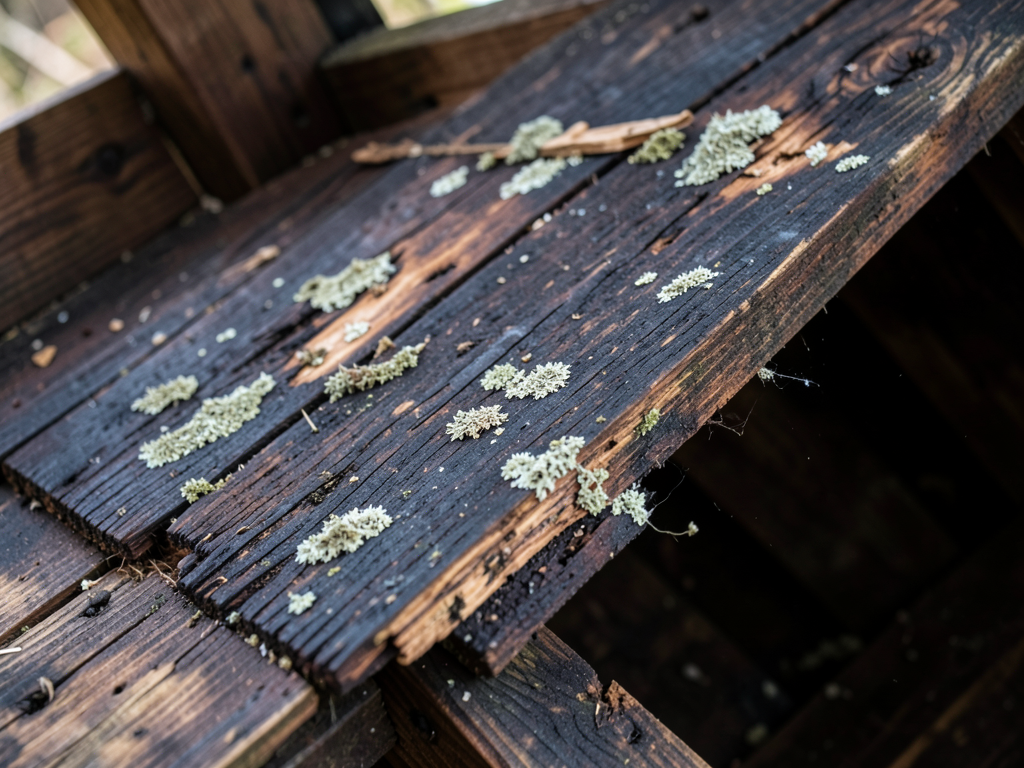
Warning signs your roof deck is rotting include dark staining on plywood, a spongy feel when walking on certain areas of your roof, musty odors in upstairs rooms, rusted nails protruding through the decking, and peeling exterior paint that seems to happen no matter how many times you repaint. EPA Mold Guidelines.
Proper ventilation is your first line of defense. The ‘intake and exhaust’ principle requires equal amounts of soffit ventilation and ridge or gable vents. Building code requires 1 square foot of net free ventilation area for every 300 square feet of attic floor space when using a vapor barrier, or 1:150 without a vapor barrier.. Read more about Using cool roof technology to combat the urban heat island effect in downtown Indianapolis.
Insulation plays a critical role too. Indiana falls in Zone 5, requiring R-49 to R-60 insulation in attics. But insulation works against you if it blocks soffit vents. Baffles—those plastic or foam channels—keep insulation away from the roof edge, ensuring air flows from soffit to ridge.
Ice dams in winter create another moisture problem specific to Central Indiana. When snow melts on a warm roof deck and refreezes at the eaves, water backs up under shingles. This water finds its way into your attic, where it joins the summer humidity in destroying your roof deck.
Cost factors for attic remediation in Greenwood vary widely. Basic vent installation runs $300-$800. Mold remediation can cost $500-$6,000 depending on extent. Replacing rotted decking averages $4-$8 per square foot. A full attic overhaul including new insulation and ventilation might run $3,000-$8,000.
Professional attic inspections use moisture meters to detect hidden water damage. These tools measure moisture content in wood—anything above 20% indicates active rot risk. Thermal imaging cameras reveal temperature differences that show where moisture is hiding behind walls and under insulation.
The Indiana Residential Code (based on IRC) requires ice barrier protection for eaves in areas prone to ice damming. This means a self-adhering polymer-modified bitumen sheet installed from the roof edge up the slope for at least 24 inches. This code exists specifically because of Central Indiana’s freeze-thaw cycles.
Common mistakes homeowners make include adding more insulation without addressing ventilation, blocking soffit vents with storage items, and ignoring bathroom exhaust fans that vent directly into the attic instead of outside. Each of these compounds the humidity problem.
Seasonal maintenance should include checking attic humidity levels with a hygrometer. Readings above 60% indicate ventilation problems. In winter, look for frost on the underside of the roof deck—this shows moisture is condensing in your attic. Should you choose cedar shake or asphalt for your Meridian-Kessler home?.
Attic bypasses—those gaps around light fixtures, plumbing vents, and chimney chases—allow warm moist air to escape into the attic. Sealing these with spray foam or caulk reduces the moisture load significantly.
The relationship between R-value and moisture is counterintuitive. Higher R-value insulation reduces heat transfer, but if installed incorrectly, it can trap moisture against the roof deck. The key is balanced approach: proper insulation plus proper ventilation.
Professional remediation starts with a comprehensive attic assessment. Technicians measure current ventilation, check for moisture damage, inspect insulation levels, and identify air leaks. This diagnostic approach ensures repairs address the root cause, not just symptoms.
DIY attic humidity checks can save you money if done correctly. Use a quality hygrometer placed in the center of your attic for 24 hours. Readings consistently above 60% mean you need professional help. Also check for visible mold growth, water stains, and that spongy feel when walking on roof areas.
The cost of ignoring attic humidity far exceeds remediation expenses. A rotted roof deck can fail catastrophically during a storm. The average roof replacement cost in Greenwood runs $8,000-$15,000—money that could have been saved with proper attic maintenance. The honest cost of a full roof replacement in Indianapolis for 2026.
Modern ventilation solutions include solar-powered attic fans that run without electricity, smart vents that adjust airflow based on temperature and humidity, and continuous ridge vents that provide maximum exhaust capacity. These technologies make proper ventilation more effective than ever.
Understanding your attic’s psychrometrics—the relationship between temperature, humidity, and dew point—helps you make informed decisions. When attic air reaches dew point temperature, condensation begins. This happens when warm humid air contacts cooler surfaces, which is why proper insulation and ventilation work together.
Local building factors matter too. Greenwood homes built before 1980 often lack proper soffit ventilation. Many mid-century ranches have inadequate ridge vents. These architectural limitations require customized solutions rather than one-size-fits-all approaches.
The financial impact extends beyond roof replacement. Moisture damage can affect your entire home’s structure, leading to mold remediation, drywall replacement, and even foundation issues from chronic moisture. Early intervention prevents these cascading problems.
Professional assessment includes checking your attic’s cross-ventilation. Air should flow freely from soffits through the attic space and out ridge vents. Blocked airflow anywhere in this path creates dead zones where moisture accumulates.
Material selection for remediation matters. Modern OSB decking includes moisture-resistant resins, but proper installation technique is crucial. Overdriving nails, inadequate spacing between panels, and poor sealing at joints all contribute to moisture intrusion.
The connection between attic humidity and energy costs surprises many homeowners. A humid attic forces your air conditioner to work harder, increasing cooling costs by 15-25%. Proper ventilation reduces this load while protecting your roof structure.
Emergency situations require immediate attention. If you notice ceiling stains, active dripping, or sagging roof areas, call for professional help immediately. These signs indicate advanced moisture damage that threatens structural integrity. Getting emergency roof repairs in Broad Ripple before the next big rain.
Preventative maintenance includes annual attic inspections, cleaning of soffit vents, checking for animal nests that block ventilation, and ensuring bathroom fans vent outside rather than into the attic space. Preventative Roof Maintenance Plans.
The science of wood decay involves several fungi species. Brown rot causes wood to crack and crumble. White rot makes wood spongy and stringy. Soft rot works more slowly but can survive in conditions where other fungi cannot. All three thrive in the humid attics common to Greenwood.
Understanding your home’s specific vulnerabilities helps target remediation efforts. Corner attics, complex roof designs, and homes surrounded by mature trees all face unique ventilation challenges that require customized solutions.
Professional remediation follows a systematic approach: assessment, moisture mapping, targeted repairs, ventilation upgrades, and final verification. This methodical process ensures lasting results rather than temporary fixes.
The relationship between attic humidity and indoor air quality affects your family’s health. Mold spores from a humid attic circulate through your HVAC system, potentially causing respiratory issues and allergic reactions.
Modern building science recognizes that attics need to breathe. The old practice of sealing attics completely has been replaced by understanding that controlled airflow prevents moisture accumulation while maintaining energy efficiency.
Your Greenwood home deserves protection from Indiana’s challenging climate. High humidity summers followed by freezing winters create conditions that destroy roofs from the inside out. Proper attic management prevents this damage while improving your home’s comfort and efficiency.
Don’t wait for visible damage to appear. By the time you see water stains on your ceiling, the structural damage is already advanced. Proactive assessment and remediation save thousands in potential repairs.
The investment in proper attic ventilation and moisture management pays dividends through extended roof life, reduced energy costs, and improved indoor air quality. It’s not just about preventing rot—it’s about protecting your entire home.
Frequently Asked Questions
How do I know if my attic has a humidity problem?
Use a hygrometer to measure attic humidity. Readings consistently above 60% indicate a ventilation problem. Also look for visible mold, water stains, musty odors, and condensation on roof deck surfaces.
Can I fix attic humidity myself?
Basic maintenance like cleaning soffit vents and ensuring bathroom fans vent outside is DIY-friendly. However, correcting structural ventilation issues, replacing rotted decking, or addressing complex moisture problems requires professional expertise.
How much does it cost to fix a humid attic in Greenwood?
Costs range from $300 for basic vent installation to $8,000+ for complete attic remediation including new insulation, ventilation, and mold treatment. The extent of damage determines the final cost.
Will proper ventilation lower my energy bills?
Yes. Proper attic ventilation can reduce cooling costs by 15-25% by preventing your attic from turning into a heat trap. It also extends the life of your HVAC equipment by reducing its workload.
How often should I check my attic humidity?
Check attic humidity seasonally—spring, summer, and fall. After major storms or during heat waves, additional checks help catch problems early. Annual professional inspections provide comprehensive assessment. For more information, visit International Association of Certified Home Inspectors.
{
“@context”: “https://schema.org”,
“@type”: “BlogPosting”,
“headline”: “Why high humidity makes your Greenwood attic feel like a sauna (and how it rots your roof deck)”,
“description”: “Discover how Indianapolis humidity turns your attic into a moisture trap and destroys your roof deck. Learn the warning signs and proven solutions to prevent costly damage.”,
“wordCount”: 1671,
“datePublished”: “2026-04-06T13:29:00.000Z”,
“dateModified”: “2026-04-06T13:29:00.000Z”,
“inLanguage”: “en-US”,
“mainEntityOfPage”: {
“@type”: “WebPage”,
“@id”: “https://eliteroofingindianapolis.com”
},
“publisher”: {
“@type”: “LocalBusiness”,
“name”: “Elite Roofing Indianapolis”,
“url”: “https://eliteroofingindianapolis.com”
},
“author”: {
“@type”: “Organization”,
“name”: “Elite Roofing Indianapolis”,
“url”: “https://eliteroofingindianapolis.com”
},
“image”: {
“@type”: “ImageObject”,
“url”: “https://eliteroofingindianapolis.com/wp-content/uploads/2026/03/why-high-humidity-makes-your-greenwood-attic-feel-1.png”
}
}
{
“@context”: “https://schema.org”,
“@type”: “RoofingContractor”,
“name”: “Elite Roofing Indianapolis”,
“url”: “https://eliteroofingindianapolis.com”,
“address”: {
“@type”: “PostalAddress”,
“addressLocality”: “Indianapolis”
},
“areaServed”: {
“@type”: “City”,
“name”: “Indianapolis”
}
}
{
“@context”: “https://schema.org”,
“@type”: “FAQPage”,
“mainEntity”: [
{
“@type”: “Question”,
“name”: “How do I know if my attic has a humidity problem?”,
“acceptedAnswer”: {
“@type”: “Answer”,
“text”: “Use a hygrometer to measure attic humidity. Readings consistently above 60% indicate a ventilation problem. Also look for visible mold, water stains, musty odors, and condensation on roof deck surfaces.”
}
},
{
“@type”: “Question”,
“name”: “Can I fix attic humidity myself?”,
“acceptedAnswer”: {
“@type”: “Answer”,
“text”: “Basic maintenance like cleaning soffit vents and ensuring bathroom fans vent outside is DIY-friendly. However, correcting structural ventilation issues, replacing rotted decking, or addressing complex moisture problems requires professional expertise.”
}
},
{
“@type”: “Question”,
“name”: “How much does it cost to fix a humid attic in Greenwood?”,
“acceptedAnswer”: {
“@type”: “Answer”,
“text”: “Costs range from $300 for basic vent installation to $8,000+ for complete attic remediation including new insulation, ventilation, and mold treatment. The extent of damage determines the final cost.”
}
},
{
“@type”: “Question”,
“name”: “Will proper ventilation lower my energy bills?”,
“acceptedAnswer”: {
“@type”: “Answer”,
“text”: “Yes. Proper attic ventilation can reduce cooling costs by 15-25% by preventing your attic from turning into a heat trap. It also extends the life of your HVAC equipment by reducing its workload.”
}
},
{
“@type”: “Question”,
“name”: “How often should I check my attic humidity?”,
“acceptedAnswer”: {
“@type”: “Answer”,
“text”: “Check attic humidity seasonally—spring, summer, and fall. After major storms or during heat waves, additional checks help catch problems early. Annual professional inspections provide comprehensive assessment. For more information, visit International Association of Certified Home Inspectors.”
}
}
]
}
{
“@context”: “https://schema.org”,
“@type”: “BreadcrumbList”,
“itemListElement”: [
{
“@type”: “ListItem”,
“position”: 1,
“name”: “Home”,
“item”: “https://eliteroofingindianapolis.com”
},
{
“@type”: “ListItem”,
“position”: 2,
“name”: “Blog”,
“item”: “https://eliteroofingindianapolis.com/blog”
},
{
“@type”: “ListItem”,
“position”: 3,
“name”: “Why high humidity makes your Greenwood attic feel like a sauna (and how it rots your roof deck)”
}
]
}
{
“@context”: “https://schema.org”,
“@type”: “Service”,
“serviceType”: “Roofing”,
“provider”: {
“@type”: “LocalBusiness”,
“name”: “Elite Roofing Indianapolis”,
“url”: “https://eliteroofingindianapolis.com”
},
“areaServed”: {
“@type”: “City”,
“name”: “Indianapolis”
},
“description”: “Discover how Indianapolis humidity turns your attic into a moisture trap and destroys your roof deck. Learn the warning signs and proven solutions to prevent costly damage.”
}