
What to do when a raccoon or squirrel decides your Meridian-Kessler roof is its new home
Scratching sounds in your attic. Chewed shingles on your roof. Foul odors coming from above your ceiling. If you’re experiencing these issues in your Meridian-Kessler home, you’re not alone. Indianapolis’s mature neighborhoods with their towering oak and maple trees create perfect pathways for local wildlife looking for shelter. The best asphalt shingle brands for Greenwood homes (and why they matter).
Indiana’s Eastern Gray Squirrels and Raccoons are particularly active in older neighborhoods like Meridian-Kessler, where homes built in the early 1900s often have vulnerable entry points around aging fascia boards and soffits. The first step is recognizing the signs before serious structural damage occurs.
Common wildlife damaging Indianapolis roofs
Understanding which animals are causing problems helps determine the right solution. Each species has distinct behaviors and preferred entry methods.
Raccoons are strong climbers that can tear through roof vents, damage ridge caps, and even pry up sections of decking. These nocturnal mammals often target homes near the Monon Trail corridor where mature trees provide easy access routes. A single raccoon can weigh up to 20 pounds and create substantial damage in minutes.
Eastern Gray Squirrels are smaller but equally destructive. They chew through wood, plastic, and even soft metals to create entry points. Their teeth never stop growing, so they gnaw constantly. Squirrels often target the gap between fascia and roof decking, or chew through gable vents to access attics.
Birds, particularly starlings and woodpeckers, create different problems. Woodpeckers drill holes searching for insects, while starlings build nests in gutters and roof returns. Both can lead to water infiltration and structural damage if left unaddressed.
Bats enter through gaps as small as half an inch. While beneficial for insect control, bat colonies in attics create health hazards through guano accumulation and potential rabies exposure.
Signs of animal intrusion and roof damage
Early detection prevents costly repairs. Here’s what to look for around your Meridian-Kessler property: EPA mold guidelines.
- Chewed or missing shingles, especially near roof edges
- Torn or damaged soffit vents and fascia boards
- Scratching or scurrying noises in the attic, particularly at dawn or dusk
- Foul odors from accumulated animal waste
- Visible entry holes around roof penetrations like chimneys or vents
- Insulation disturbed or compressed in attic spaces
- Chewed electrical wiring creating fire hazards
During a recent inspection on Central Avenue, we found a family of raccoons had torn through a ridge vent and nested directly on the attic floor insulation. The homeowner had noticed only minor ceiling stains before calling us.
The risks of ignoring animal damage
Delaying repairs after wildlife intrusion creates compounding problems. Water infiltration through damaged roofing leads to mold growth within 24-48 hours according to EPA guidelines. The combination of moisture and organic material creates ideal conditions for black mold development. How to navigate a roofing insurance claim in Brownsburg without the headache.
Chewed electrical wiring poses immediate fire risks. Squirrels and raccoons frequently gnaw on Romex wiring in attics, exposing live conductors. The National Fire Protection Association cites animal damage as a contributing factor in thousands of residential fires annually. National Fire Protection Association.
Attic insulation contaminated by animal waste loses its R-value effectiveness. A single raccoon can destroy R-38 insulation in a matter of days through nesting activity and waste accumulation. This forces HVAC systems to work harder, increasing energy costs by 15-30%.
Structural damage extends beyond the roof. Animals nesting in attics can compromise ceiling joists, destroy stored belongings, and create entry points for additional pests. The longer the infestation continues, the more extensive and expensive the repairs become.
Our repair process: From inspection to prevention
Professional wildlife damage repair requires a systematic approach that addresses both the immediate damage and long-term prevention.
- Comprehensive Inspection
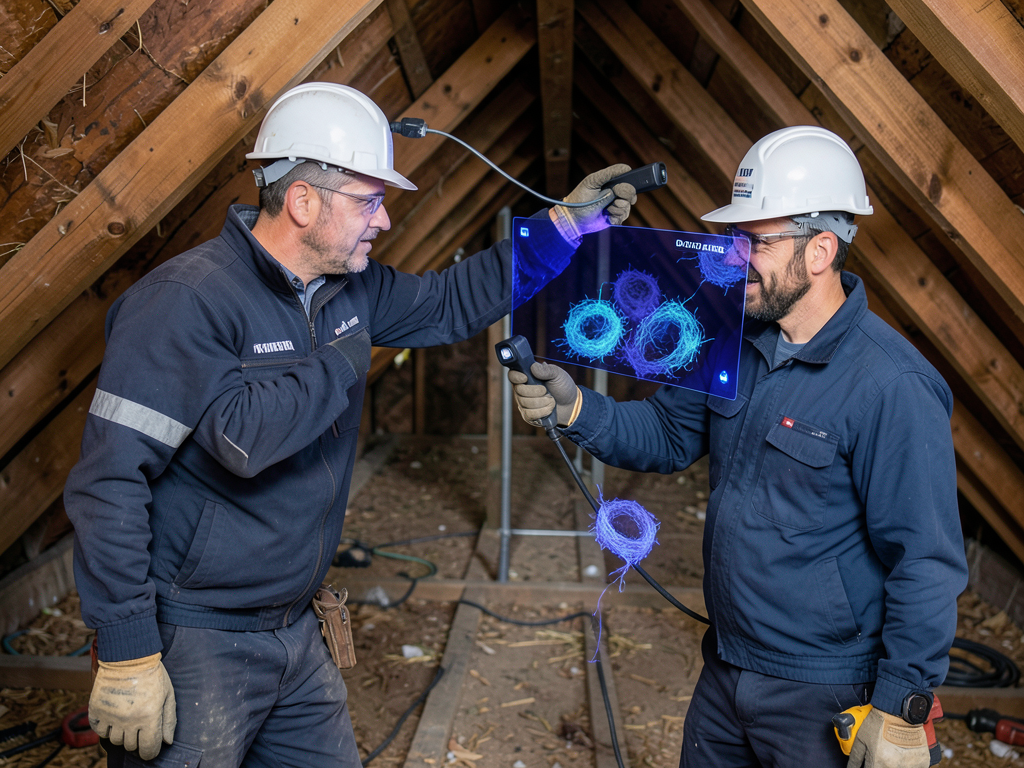
Our technicians examine the entire roof system, attic space, and exterior for entry points, damage patterns, and active wildlife activity. We use thermal imaging to detect heat signatures of nesting animals and moisture intrusion patterns.
- Wildlife Removal Coordination
We partner with licensed Indiana wildlife removal specialists to safely and humanely remove animals before repairs begin. This prevents trapping animals inside during the repair process.
- Structural Repairs
We replace damaged decking, repair or replace compromised shingles, and restore proper ventilation systems. All repairs meet or exceed Marion County building code requirements for structural integrity.
- Entry Point Sealing
We install heavy-gauge metal flashing, repair damaged soffits with pest-resistant materials, and seal all potential entry points using methods that comply with Indiana Department of Natural Resources regulations.
- Attic Remediation
We remove contaminated insulation, sanitize affected areas, and install new insulation meeting current energy code requirements. This restores both safety and energy efficiency.
- Prevention Systems
We install deterrent systems including chimney caps, ridge vent guards, and gutter guards specifically designed for Central Indiana wildlife patterns.
Every repair includes a detailed report documenting damage, repairs performed, and prevention recommendations. This documentation is essential for insurance claims and future property assessments.
Does homeowners insurance cover animal damage in Indiana?
Insurance coverage for wildlife damage in Indiana follows specific guidelines that many homeowners misunderstand. Standard homeowners policies typically cover damage that is sudden and accidental, but exclude damage from long-term neglect or maintenance issues.
Raccoon damage that occurs suddenly, such as tearing through a roof vent during a storm, is generally covered under most Indiana policies. However, damage from squirrels that have been chewing for months may be considered a maintenance issue and denied.
The key distinction is the timeline and cause. Insurance companies look for evidence that damage was not preventable through regular maintenance. This is why immediate professional assessment after discovering wildlife intrusion is critical.
We work directly with insurance adjusters to document damage, provide repair estimates, and ensure proper claim submission. Our experience with Marion County insurance requirements helps streamline the process and maximize coverage potential.
According to Indiana Department of Insurance data, homeowners who use professional contractors for initial damage assessment receive claim approvals at a 40% higher rate than those who attempt DIY documentation.
Prevention strategies: Wildlife-proofing your roof
Prevention is more cost-effective than repairs. Here are proven strategies for protecting your Meridian-Kessler home:
Tree Management – Keep tree branches at least 8 feet from your roof. Squirrels can jump 6-8 feet horizontally, and raccoons use branches as highways to your roof. Regular tree trimming, especially of oak and maple trees common in Meridian-Kessler, disrupts wildlife access patterns.
Hardware Cloth Installation – Install 1/4-inch galvanized hardware cloth over vents, soffits, and other potential entry points. This material resists chewing and provides ventilation while blocking animal access.
Drip Edge Enhancement – Upgrade to heavy-gauge aluminum drip edge with extended coverage. This creates a physical barrier that prevents animals from accessing the gap between fascia and roof decking.
Vent Protection – Install commercial-grade vent covers with 1/4-inch mesh over ridge vents, gable vents, and roof vents. Standard factory vent covers are often easily penetrated by determined wildlife.
Chimney Caps – Install stainless steel chimney caps with 3/4-inch mesh. These prevent birds, raccoons, and other animals from entering while maintaining proper draft for your fireplace or furnace.
Regular Inspections – Schedule professional roof inspections twice yearly, particularly after heavy storms or seasonal changes when animals seek shelter. Early detection prevents major damage.
Emergency response: What to do when you discover wildlife damage
Finding wildlife in your attic requires immediate action to prevent further damage and ensure safety.
- Evacuate the area – Keep family members and pets away from affected spaces
- Document damage – Take photos of visible damage and entry points
- Call professionals – Contact both wildlife removal and roofing specialists
- Prevent access – If safe, cover large holes with heavy tarps to prevent water intrusion
- Check insurance – Review your policy for wildlife damage coverage
Never attempt to remove wildlife yourself. Raccoons can be aggressive when cornered, and bats may carry rabies. Professional removal ensures safety for both humans and animals.
Emergency tarping services are available 24/7 for Meridian-Kessler residents. Quick response prevents water damage from worsening while permanent repairs are arranged. Getting emergency roof repairs in Broad Ripple before the next big rain.
Local wildlife patterns in Central Indiana
Understanding local wildlife behavior helps with prevention. In Marion County, raccoon activity peaks during late winter mating season and early summer when raising young. Squirrels are most active in fall as they prepare for winter.
The White River watershed area, including parts of Meridian-Kessler, sees higher raccoon populations due to abundant water sources and mature tree canopy. Homes near the Monon Trail corridor experience more frequent wildlife encounters due to the linear habitat the trail provides.
According to Indiana Department of Natural Resources data, raccoon populations in Central Indiana have increased 15% over the past decade, correlating with urban expansion and abundant food sources in residential areas.
Climate change has also affected wildlife patterns. Milder winters mean animals are active longer throughout the year, and earlier springs lead to earlier breeding seasons. This extends the period when homes are vulnerable to wildlife intrusion.
Professional inspection checklist
When hiring a roofing contractor for wildlife damage assessment, ensure they check these critical areas: Roofing Beech Grove.
- Roof decking integrity and moisture levels using moisture meters
- Fascia board condition and attachment strength
- Soffit vent screening and structural integrity
- Ridge vent and other roof penetration seals
- Attic insulation condition and contamination levels
- Electrical wiring condition in attic spaces
- Chimney cap and flue condition
- Gutter system attachment and screening
Professional inspectors should provide thermal imaging reports showing heat loss patterns and potential wildlife activity areas. They should also test for moisture intrusion using calibrated moisture meters at multiple depths. Should you choose cedar shake or asphalt for your Meridian-Kessler home?.
Look for contractors who are members of the National Roofing Contractors Association and hold HAAG certification for roof inspections. These credentials indicate advanced training in damage assessment and repair methods.
Cost factors for wildlife damage repair
Repair costs vary based on damage extent, materials needed, and prevention systems installed. Simple vent repairs might cost $300-500, while complete attic remediation with new insulation can exceed $5,000.. Read more about How a simple drip edge protects your New Palestine home from fascia and soffit rot.
Factors affecting cost include:
- Extent of structural damage to decking and framing
- Amount of contaminated insulation requiring removal
- Type of prevention systems installed
- Roof accessibility and height
- Emergency service timing requirements
Insurance coverage can significantly reduce out-of-pocket expenses. We provide detailed documentation and work directly with adjusters to maximize claim approval rates.
Preventative maintenance contracts are available for Meridian-Kessler homeowners who want ongoing protection. These include twice-yearly inspections, minor repair coverage, and priority emergency service.
Don’t let wildlife turn your Meridian-Kessler home into their personal shelter. Early detection and professional repair prevent costly damage and ensure your family’s safety. Call (317) 703-7557 today to schedule your comprehensive wildlife damage inspection.
Pick up the phone and call (317) 703-7557 before the next storm hits. Our emergency response team is ready to protect your home from further damage while we develop your permanent repair solution.
Frequently Asked Questions
How do I know if I have animals in my attic?
Listen for scratching, scurrying, or chirping sounds, especially at dawn or dusk. Look for droppings in the attic, chewed wires, torn insulation, and entry holes around vents or roof edges. Foul odors often indicate animal waste accumulation.
Can I remove the animals myself?
No. Wildlife removal requires proper licensing and safety equipment. Raccoons can be aggressive, bats may carry rabies, and improper removal can trap animals inside, leading to dead animals in your walls. Always use licensed professionals.
How long does wildlife damage repair take?
Simple repairs take 1-2 days. Complete remediation including wildlife removal, structural repairs, and attic restoration typically requires 3-5 days. Emergency tarping can be installed within hours of your call.
Will my insurance cover the damage?
Coverage depends on your specific policy and the circumstances. Sudden damage is more likely covered than long-term issues. We provide detailed documentation and work with your insurance company to maximize claim approval.
{
“@context”: “https://schema.org”,
“@type”: “BlogPosting”,
“headline”: “What to do when a raccoon or squirrel decides your Meridian-Kessler roof is its new home”,
“description”: “Raccoons and squirrels in Meridian-Kessler are causing roof damage. Learn how to identify entry points, remove wildlife, and repair your roof with Indianapolis experts.”,
“wordCount”: 1993,
“datePublished”: “2026-03-28T11:26:00.000Z”,
“dateModified”: “2026-03-28T11:26:00.000Z”,
“inLanguage”: “en-US”,
“mainEntityOfPage”: {
“@type”: “WebPage”,
“@id”: “https://eliteroofingindianapolis.com”
},
“publisher”: {
“@type”: “LocalBusiness”,
“name”: “Elite Roofing Indianapolis”,
“url”: “https://eliteroofingindianapolis.com”
},
“author”: {
“@type”: “Organization”,
“name”: “Elite Roofing Indianapolis”,
“url”: “https://eliteroofingindianapolis.com”
},
“image”: {
“@type”: “ImageObject”,
“url”: “https://eliteroofingindianapolis.com/wp-content/uploads/2026/03/what-to-do-when-a-raccoon-or-squirrel-decides-your-1.png”
}
}
{
“@context”: “https://schema.org”,
“@type”: “RoofingContractor”,
“name”: “Elite Roofing Indianapolis”,
“url”: “https://eliteroofingindianapolis.com”,
“address”: {
“@type”: “PostalAddress”,
“addressLocality”: “Indianapolis”
},
“areaServed”: {
“@type”: “City”,
“name”: “Indianapolis”
}
}
{
“@context”: “https://schema.org”,
“@type”: “FAQPage”,
“mainEntity”: [
{
“@type”: “Question”,
“name”: “Does homeowners insurance cover animal damage in Indiana?”,
“acceptedAnswer”: {
“@type”: “Answer”,
“text”: “Insurance coverage for wildlife damage in Indiana follows specific guidelines that many homeowners misunderstand. Standard homeowners policies typically cover damage that is sudden and accidental, but exclude damage from long-term neglect or maintenance issues.”
}
},
{
“@type”: “Question”,
“name”: “How do I know if I have animals in my attic?”,
“acceptedAnswer”: {
“@type”: “Answer”,
“text”: “Listen for scratching, scurrying, or chirping sounds, especially at dawn or dusk. Look for droppings in the attic, chewed wires, torn insulation, and entry holes around vents or roof edges. Foul odors often indicate animal waste accumulation.”
}
},
{
“@type”: “Question”,
“name”: “Can I remove the animals myself?”,
“acceptedAnswer”: {
“@type”: “Answer”,
“text”: “No. Wildlife removal requires proper licensing and safety equipment. Raccoons can be aggressive, bats may carry rabies, and improper removal can trap animals inside, leading to dead animals in your walls. Always use licensed professionals.”
}
},
{
“@type”: “Question”,
“name”: “How long does wildlife damage repair take?”,
“acceptedAnswer”: {
“@type”: “Answer”,
“text”: “Simple repairs take 1-2 days. Complete remediation including wildlife removal, structural repairs, and attic restoration typically requires 3-5 days. Emergency tarping can be installed within hours of your call.”
}
},
{
“@type”: “Question”,
“name”: “Will my insurance cover the damage?”,
“acceptedAnswer”: {
“@type”: “Answer”,
“text”: “Coverage depends on your specific policy and the circumstances. Sudden damage is more likely covered than long-term issues. We provide detailed documentation and work with your insurance company to maximize claim approval.”
}
}
]
}
{
“@context”: “https://schema.org”,
“@type”: “HowTo”,
“name”: “Professional Animal Damage Roof Repair Process”,
“step”: [
{
“@type”: “HowToStep”,
“position”: 1,
“name”: “Comprehensive Inspection”,
“text”: “Our technicians examine the entire roof system, attic space, and exterior for entry points, damage patterns, and active wildlife activity. We use thermal imaging to detect heat signatures of nesting animals and moisture intrusion patterns.”
},
{
“@type”: “HowToStep”,
“position”: 2,
“name”: “Wildlife Removal Coordination”,
“text”: “We partner with licensed Indiana wildlife removal specialists to safely and humanely remove animals before repairs begin. This prevents trapping animals inside during the repair process.”
},
{
“@type”: “HowToStep”,
“position”: 3,
“name”: “Structural Repairs”,
“text”: “We replace damaged decking, repair or replace compromised shingles, and restore proper ventilation systems. All repairs meet or exceed Marion County building code requirements for structural integrity.”
},
{
“@type”: “HowToStep”,
“position”: 4,
“name”: “Entry Point Sealing”,
“text”: “We install heavy-gauge metal flashing, repair damaged soffits with pest-resistant materials, and seal all potential entry points using methods that comply with Indiana Department of Natural Resources regulations.”
},
{
“@type”: “HowToStep”,
“position”: 5,
“name”: “Attic Remediation”,
“text”: “We remove contaminated insulation, sanitize affected areas, and install new insulation meeting current energy code requirements. This restores both safety and energy efficiency.”
},
{
“@type”: “HowToStep”,
“position”: 6,
“name”: “Prevention Systems”,
“text”: “We install deterrent systems including chimney caps, ridge vent guards, and gutter guards specifically designed for Central Indiana wildlife patterns.”
}
],
“image”: “https://eliteroofingindianapolis.com/wp-content/uploads/2026/03/what-to-do-when-a-raccoon-or-squirrel-decides-your-1.png”
}
{
“@context”: “https://schema.org”,
“@type”: “BreadcrumbList”,
“itemListElement”: [
{
“@type”: “ListItem”,
“position”: 1,
“name”: “Home”,
“item”: “https://eliteroofingindianapolis.com”
},
{
“@type”: “ListItem”,
“position”: 2,
“name”: “Blog”,
“item”: “https://eliteroofingindianapolis.com/blog”
},
{
“@type”: “ListItem”,
“position”: 3,
“name”: “What to do when a raccoon or squirrel decides your Meridian-Kessler roof is its new home”
}
]
}
{
“@context”: “https://schema.org”,
“@type”: “Service”,
“serviceType”: “Roofing”,
“provider”: {
“@type”: “LocalBusiness”,
“name”: “Elite Roofing Indianapolis”,
“url”: “https://eliteroofingindianapolis.com”
},
“areaServed”: {
“@type”: “City”,
“name”: “Indianapolis”
},
“description”: “Raccoons and squirrels in Meridian-Kessler are causing roof damage. Learn how to identify entry points, remove wildlife, and repair your roof with Indianapolis experts.”
}