
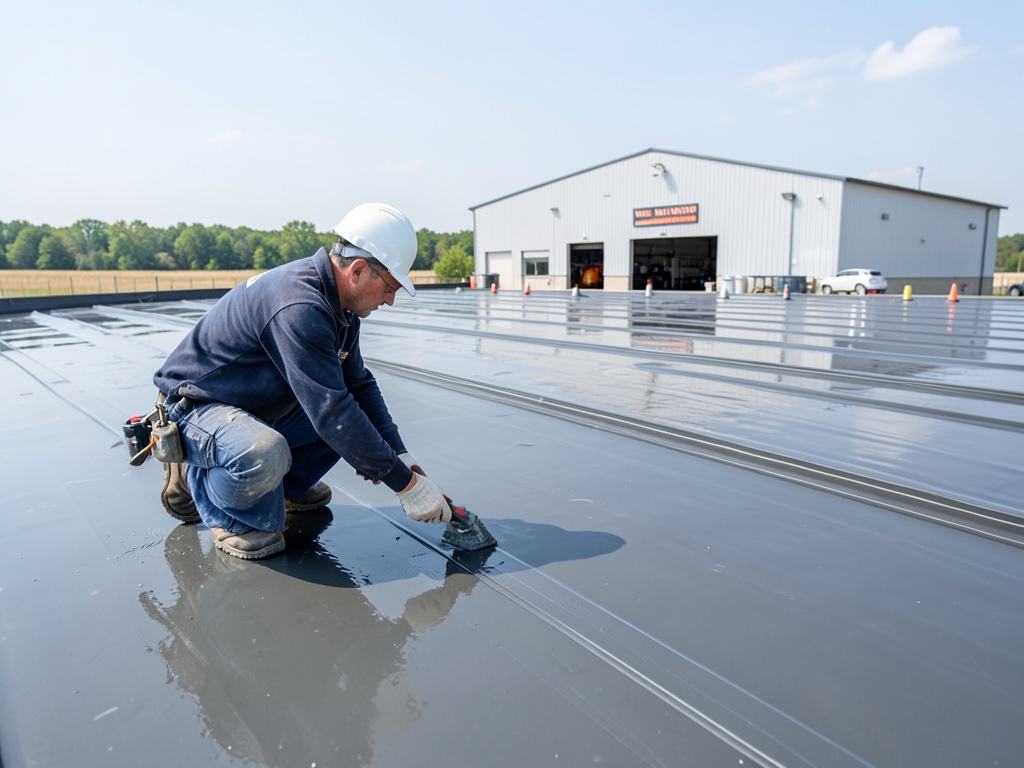
The smart way to extend the life of your warehouse roof in West Newton without a full tear-off
Your warehouse roof in West Newton is showing signs of age. Maybe you’ve spotted ponding water after heavy rains or noticed small leaks during spring storms. The thought of a full roof replacement sends your budget into a panic spiral. But there’s a smarter path forward that many Indianapolis facility managers are discovering. The honest cost of a full roof replacement in Indianapolis for 2026.
Commercial roof coatings offer a cost-effective way to add 10-15 years to your existing roof without the disruption and expense of a complete tear-off. For West Newton warehouses, where many buildings date back to the 1970s and 1980s, this restoration approach makes perfect sense.
Instead of removing thousands of square feet of membrane and insulation, a professional coating system creates a seamless new surface right over your existing roof. The process typically costs 50-70% less than replacement while delivering immediate energy savings through improved reflectivity.
Let’s explore how this technology works and why it’s becoming the go-to solution for Indianapolis commercial properties facing aging roof challenges.
Why West Newton warehouses need specialized coating solutions
West Newton sits in a unique climate zone that creates specific challenges for commercial roofs. The area experiences dramatic temperature swings throughout the year, with summer heat often exceeding 90°F and winter temperatures dropping well below freezing. These conditions cause roofing materials to expand and contract repeatedly, weakening seams and creating stress points. How to navigate a roofing insurance claim in Brownsburg without the headache.
The region’s high humidity levels, particularly during late summer months, contribute to algae and mold growth on roof surfaces. This biological activity breaks down roofing materials faster than in drier climates. Additionally, West Newton’s proximity to the White River watershed means many buildings face drainage challenges that can lead to ponding water. Roofing Beech Grove.
Many West Newton warehouses were constructed during Indianapolis’s industrial boom, using EPDM or TPO membranes that have reached their expected service life. These single-ply systems were designed for 20-25 years of service, and many are now approaching or exceeding that timeline.
Understanding these local conditions is crucial because different coating systems perform better under specific circumstances. A coating that works perfectly in Arizona might fail prematurely in Indiana’s climate.
Types of commercial roof coatings for Indianapolis facilities
Choosing the right coating system depends on your roof’s current condition, the type of membrane underneath, and your facility’s specific needs. Here are the three primary options available for West Newton warehouses.
Silicone roof coatings
Silicone coatings excel in environments with ponding water, making them ideal for many West Newton warehouses where drainage isn’t perfect. These systems create a completely waterproof barrier that maintains flexibility even in extreme temperatures.
The material’s inherent resistance to UV degradation means it won’t chalk or erode over time. Most silicone systems carry warranties of 10-20 years when properly installed. The coating typically applies at 20-30 mils thickness, creating a durable surface that can withstand foot traffic from maintenance crews. Preventative Roof Maintenance Plans.
One diagnostic advantage of silicone is that it’s easy to identify moisture problems before application. During the inspection phase, technicians use moisture meters to detect trapped water that would compromise the coating’s adhesion.
Acrylic elastomeric coatings
Acrylic coatings offer excellent value for roofs with good drainage and moderate UV exposure. These water-based systems cure to form a flexible membrane that expands and contracts with temperature changes.
The material’s high reflectivity helps reduce cooling costs by up to 30% in some facilities. This energy efficiency makes acrylic coatings attractive for warehouses with significant HVAC loads. The coating applies thinner than silicone, typically at 10-20 mils, which reduces material costs. Cool Roof Rating Council.
However, acrylic systems have limitations in ponding water situations. Standing water can cause the coating to soften and fail prematurely. For West Newton buildings with drainage issues, acrylic may require additional work to improve slope before application.
Polyurethane roof coatings
Polyurethane systems provide maximum durability for high-traffic areas or roofs that support equipment like HVAC units and solar panels. These two-component systems create an exceptionally tough surface that resists impact damage and chemical exposure.
The material’s high tensile strength makes it ideal for roofs subject to wind uplift or those in areas prone to severe weather. Polyurethane coatings typically apply at 15-25 mils and can bridge small cracks and gaps in the existing membrane.
The main drawback is cost. Polyurethane systems often run 20-30% higher than silicone or acrylic options. However, for warehouses with rooftop equipment or those in wind-prone areas of Marion County, the added durability may justify the investment.
The restoration process: What to expect
Understanding the coating process helps you plan for minimal disruption to your operations. Here’s what happens during a typical commercial roof restoration in West Newton.
Step 1: Comprehensive roof inspection
Before any coating applies, technicians conduct a thorough assessment using moisture meters, infrared scanning, and visual inspection. This diagnostic phase identifies areas where water has penetrated the existing membrane, locates weak seams, and determines if the roof structure can support another layer.
During this phase, we check for compliance with Indianapolis building codes regarding roof loading. Many older West Newton warehouses were built before current standards, so structural evaluation is critical.
Step 2: Surface preparation
Proper cleaning ensures coating adhesion. The process starts with power washing to remove dirt, debris, and biological growth. For stubborn areas, we use biodegradable cleaners that won’t harm nearby landscaping or stormwater systems.
After cleaning, the roof must dry completely. In Indiana’s humid climate, this can take 24-48 hours depending on weather conditions. Moisture content testing confirms the surface is ready for coating.
Step 3: Repairs and reinforcements
Any damaged areas receive repair before coating application. This includes sealing splits in EPDM, reinforcing TPO seams, and addressing blisters or bubbles. We also install additional drainage components if ponding water is identified as a problem. EPA Cool Roofs information.
According to NRCA guidelines, all penetrations, flashings, and termination bars receive special attention. These detail areas are where most roof failures occur, so reinforcing them extends the system’s overall life.
Step 4: Primer and base coat application
A primer coat ensures proper adhesion between the existing membrane and the new coating. The primer also helps identify any remaining moisture or contamination that could compromise the system.
After the primer dries, we apply the base coat at the manufacturer’s specified mil thickness. For silicone systems, this typically means two coats to achieve the required 20-30 mil dry film thickness.
Step 5: Final detailing and inspection
The last step involves detailing all terminations, flashings, and penetrations with additional coating material. We also install walk pads around rooftop equipment to prevent wear from maintenance traffic.
A final inspection ensures uniform coverage and proper mil thickness across the entire roof area. Most manufacturers require this verification for warranty compliance.
Cost-benefit analysis for Indianapolis building owners
Understanding the financial implications helps you make an informed decision. Here’s how coating compares to replacement for West Newton warehouses.
| Factor | Full Replacement | Roof Coating |
|---|---|---|
| Initial Cost per sq ft | $5-8 | $2-3 |
| Business Interruption | 2-3 weeks | 2-3 days |
| Energy Savings | Minimal | 15-30% |
| Tax Treatment | Depreciation over 39 years | Section 179 expensing possible |
| Waste to Landfill | Several tons | None |
The energy savings from reflective coatings can be substantial. A warehouse in West Newton spending $2,000 monthly on cooling could see that bill drop by $300-600 per month during peak summer months. Over a 10-year period, these savings often exceed the coating’s initial cost.
Section 179 of the tax code allows businesses to expense the entire cost of roof coatings in the year of installation rather than depreciating it over decades. This immediate write-off can significantly improve cash flow for capital planning.
Local case studies: Success stories in Greater Indianapolis
Several West Newton warehouses have already benefited from coating systems. One distribution center on Kentucky Avenue reduced its cooling costs by 28% after installing a white silicone system. The facility manager reported the coating paid for itself in energy savings within 3.5 years.
A manufacturing plant near the Indianapolis International Airport chose an acrylic system for its 80,000 square foot roof. The project cost $160,000 compared to $320,000 for replacement. The coating came with a 15-year warranty and included upgraded drainage to eliminate ponding issues.
A food processing facility in Speedway opted for polyurethane due to heavy rooftop equipment. The durable surface has withstood five years of maintenance traffic without showing wear patterns. The owner estimates the coating extended the roof’s life by at least 12 years beyond what replacement would have provided.
Energy efficiency and environmental benefits
Beyond cost savings, roof coatings deliver significant environmental advantages. The Cool Roof Rating Council certifies many commercial coatings for their solar reflectance and thermal emittance properties.
A white or light-colored coating can reflect 70-85% of solar radiation, compared to 5-20% for traditional dark membranes. This reduction in heat absorption means your HVAC system works less during summer months, reducing both energy consumption and carbon emissions.
The EPA estimates that widespread adoption of cool roofing in urban areas could reduce peak energy demand by billions of kilowatt-hours annually. For individual facilities, the impact is more modest but still meaningful.
Additionally, coating systems eliminate the waste associated with tear-off and disposal. A typical 50,000 square foot roof replacement generates 10-15 tons of waste. By restoring rather than replacing, you keep that material out of landfills.
Maintenance requirements for coated roofs
One advantage of coated roofs is their simplified maintenance needs. However, some attention ensures maximum life from your investment.
Annual inspections should check for debris accumulation, especially in drainage areas. Leaves and dirt can trap moisture and create conditions for biological growth. Most coated roofs benefit from gentle cleaning every 2-3 years to maintain reflectivity. Should you choose cedar shake or asphalt for your Meridian-Kessler home?.
Small punctures or damage from rooftop equipment should receive prompt repair. Most coating manufacturers provide repair kits that match your system’s specifications. Addressing issues early prevents them from spreading.
The Indianapolis climate means coated roofs face different seasonal challenges. Spring storms can deposit debris, while winter freeze-thaw cycles may stress detail areas. A professional inspection after severe weather events helps catch problems early.
Frequently Asked Questions
How long does a commercial roof coating last in Indiana weather?
Most quality coating systems last 10-20 years in Indiana’s climate. Silicone coatings typically outlast acrylic in our humid conditions. The actual lifespan depends on factors like roof traffic, drainage quality, and maintenance. Many facilities see 15+ years from properly installed systems.
Can any roof be coated, or are there limitations?
Most single-ply membranes, metal, and modified bitumen roofs can receive coatings. However, the existing roof must be structurally sound. Severely deteriorated roofs or those with extensive moisture damage may need repairs before coating. A professional inspection determines suitability.
What temperatures are required for coating application?
Most coatings require temperatures above 40-45°F for proper curing. In Indiana, this typically means application windows from April through October. Some silicone systems can apply in cooler conditions, extending the season slightly. Moisture content in the existing roof also affects timing.
Will a coating system affect my building’s warranty?
Adding a coating typically doesn’t void existing warranties on rooftop equipment. However, you should notify equipment manufacturers and obtain their approval if the coating will contact their products. Most coating contractors handle this coordination as part of the project.
Making the right choice for your West Newton warehouse
Deciding between coating and replacement requires evaluating several factors. Consider your building’s age, the current roof’s condition, your energy costs, and your long-term plans for the property.
Facilities planning to occupy the building for 5+ more years often find coating the most economical choice. The energy savings alone can justify the investment, even before considering the extended service life.
Buildings with good structural integrity but aging membranes represent ideal coating candidates. If your roof leaks only during heavy rains or shows minor wear patterns, restoration likely makes sense.
Conversely, if you’re facing major structural repairs or planning a facility upgrade within two years, replacement might be more appropriate. The key is matching the solution to your specific situation rather than choosing based on initial cost alone.
Ready to explore whether coating makes sense for your West Newton warehouse? Call (317) 703-7557 today to schedule a no-obligation inspection. Our technicians will assess your roof’s condition and provide a detailed analysis of your options.
Don’t wait until minor issues become major problems. The sooner you address roof aging, the more options you’ll have and the lower your costs will be. Pick up the phone and call (317) 703-7557 before the next storm hits your facility.
You may also find this helpful. Why grease trap runoff is destroying your Broad Ripple restaurant roof (and how to fix it).
{
“@context”: “https://schema.org”,
“@type”: “BlogPosting”,
“headline”: “The smart way to extend the life of your warehouse roof in West Newton without a full tear-off”,
“description”: “Discover how commercial roof coatings can save your West Newton warehouse from costly replacement. Learn about silicone, acrylic, and polyurethane options for Indianapolis buildings.”,
“wordCount”: 2125,
“datePublished”: “2026-04-17T15:15:00.000Z”,
“dateModified”: “2026-04-17T15:15:00.000Z”,
“inLanguage”: “en-US”,
“mainEntityOfPage”: {
“@type”: “WebPage”,
“@id”: “https://eliteroofingindianapolis.com”
},
“publisher”: {
“@type”: “LocalBusiness”,
“name”: “Elite Roofing Indianapolis”,
“url”: “https://eliteroofingindianapolis.com”
},
“author”: {
“@type”: “Organization”,
“name”: “Elite Roofing Indianapolis”,
“url”: “https://eliteroofingindianapolis.com”
},
“image”: {
“@type”: “ImageObject”,
“url”: “https://eliteroofingindianapolis.com/wp-content/uploads/2026/03/the-smart-way-to-extend-the-life-of-your-warehouse-1.png”
}
}
{
“@context”: “https://schema.org”,
“@type”: “RoofingContractor”,
“name”: “Elite Roofing Indianapolis”,
“url”: “https://eliteroofingindianapolis.com”,
“address”: {
“@type”: “PostalAddress”,
“addressLocality”: “Indianapolis”
},
“areaServed”: {
“@type”: “City”,
“name”: “Indianapolis”
}
}
{
“@context”: “https://schema.org”,
“@type”: “FAQPage”,
“mainEntity”: [
{
“@type”: “Question”,
“name”: “How long does a commercial roof coating last in Indiana weather?”,
“acceptedAnswer”: {
“@type”: “Answer”,
“text”: “Most quality coating systems last 10-20 years in Indiana’s climate. Silicone coatings typically outlast acrylic in our humid conditions. The actual lifespan depends on factors like roof traffic, drainage quality, and maintenance. Many facilities see 15+ years from properly installed systems.”
}
},
{
“@type”: “Question”,
“name”: “Can any roof be coated, or are there limitations?”,
“acceptedAnswer”: {
“@type”: “Answer”,
“text”: “Most single-ply membranes, metal, and modified bitumen roofs can receive coatings. However, the existing roof must be structurally sound. Severely deteriorated roofs or those with extensive moisture damage may need repairs before coating. A professional inspection determines suitability.”
}
},
{
“@type”: “Question”,
“name”: “What temperatures are required for coating application?”,
“acceptedAnswer”: {
“@type”: “Answer”,
“text”: “Most coatings require temperatures above 40-45°F for proper curing. In Indiana, this typically means application windows from April through October. Some silicone systems can apply in cooler conditions, extending the season slightly. Moisture content in the existing roof also affects timing.”
}
},
{
“@type”: “Question”,
“name”: “Will a coating system affect my building’s warranty?”,
“acceptedAnswer”: {
“@type”: “Answer”,
“text”: “Adding a coating typically doesn’t void existing warranties on rooftop equipment. However, you should notify equipment manufacturers and obtain their approval if the coating will contact their products. Most coating contractors handle this coordination as part of the project.”
}
}
]
}
{
“@context”: “https://schema.org”,
“@type”: “BreadcrumbList”,
“itemListElement”: [
{
“@type”: “ListItem”,
“position”: 1,
“name”: “Home”,
“item”: “https://eliteroofingindianapolis.com”
},
{
“@type”: “ListItem”,
“position”: 2,
“name”: “Blog”,
“item”: “https://eliteroofingindianapolis.com/blog”
},
{
“@type”: “ListItem”,
“position”: 3,
“name”: “The smart way to extend the life of your warehouse roof in West Newton without a full tear-off”
}
]
}
{
“@context”: “https://schema.org”,
“@type”: “Service”,
“serviceType”: “Roofing”,
“provider”: {
“@type”: “LocalBusiness”,
“name”: “Elite Roofing Indianapolis”,
“url”: “https://eliteroofingindianapolis.com”
},
“areaServed”: {
“@type”: “City”,
“name”: “Indianapolis”
},
“description”: “Discover how commercial roof coatings can save your West Newton warehouse from costly replacement. Learn about silicone, acrylic, and polyurethane options for Indianapolis buildings.”
}