
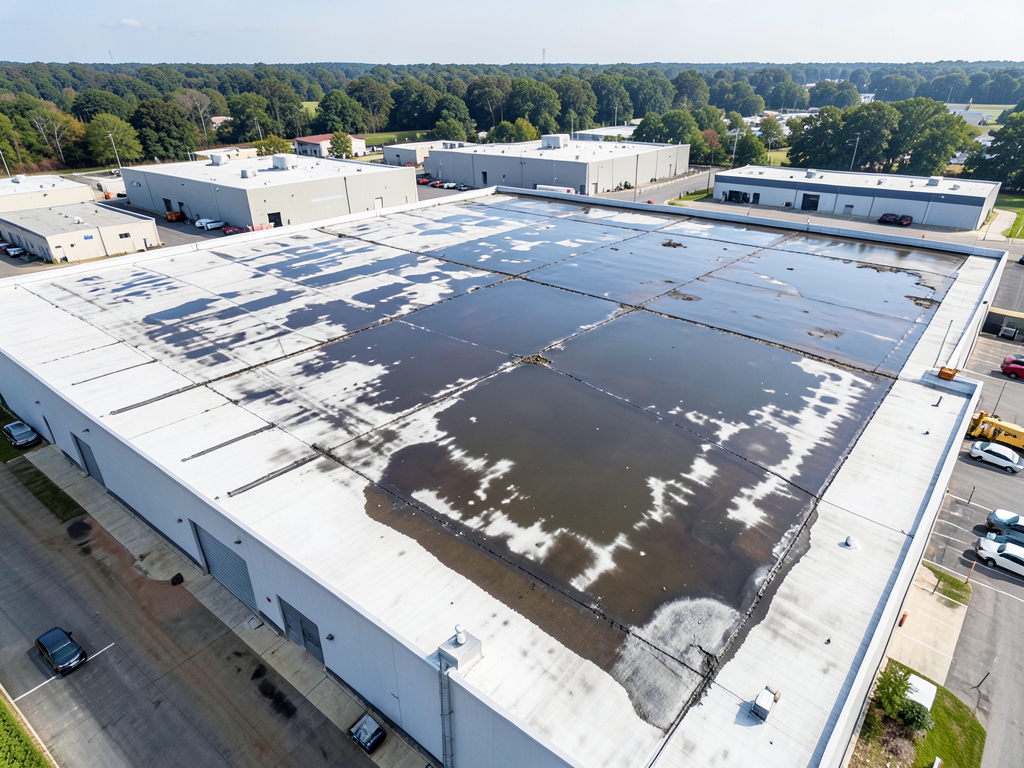
Deciding between a roof coating or a full replacement for your Park 100 warehouse
Your Park 100 warehouse roof leaks during every heavy rain. Ceiling stains spread across the break room. Energy bills climb as the old membrane loses its reflective properties. You face a critical decision: apply a protective coating or invest in a complete tear-off and replacement. This guide breaks down the technical differences, cost factors, and local conditions that affect both options for Indianapolis commercial properties. Energy Star cool roof certification.
Understanding your Park 100 warehouse roof condition
Most Park 100 warehouses were built between 1980 and 2005 using EPDM or TPO single-ply membranes. These materials typically last 20-25 years under normal conditions. However, Indianapolis weather creates unique stress patterns. Summer humidity causes thermal expansion while winter freeze-thaw cycles create micro-fractures in the membrane. Standing water in low spots accelerates deterioration through UV exposure and chemical breakdown.
A proper inspection reveals the true condition. Technicians check membrane thickness with a mil gauge, scan for moisture intrusion using infrared cameras, and test seam integrity with a pull tester. If the substrate remains structurally sound and the membrane retains at least 75% of its original thickness, coating becomes a viable restoration option.
Cost comparison: coating versus full replacement
Commercial roof coating systems cost between $1.50 and $3.00 per square foot installed. A full replacement ranges from $7.00 to $12.00 per square foot. For a typical 50,000 square foot Park 100 warehouse, coating costs approximately $125,000 while replacement exceeds $500,000. The honest cost of a full roof replacement in Indianapolis for 2026.
Coating provides immediate savings but requires maintenance every 10-15 years. Replacement offers a 25-30 year warranty but involves significant business disruption. The coating process takes 3-5 days with minimal interior access needed. Replacement requires 2-3 weeks of partial or complete facility shutdown. Preventative Roof Maintenance Plans.
| Factor | Roof Coating | Full Replacement |
|---|---|---|
| Initial Cost per sq ft | $1.50 – $3.00 | $7.00 – $12.00 |
| Installation Time | 3-5 days | 2-3 weeks |
| Business Disruption | Minimal | Significant |
| Energy Savings | 15-25% annually | 20-30% annually |
| Expected Lifespan Extension | 10-15 years | 25-30 years |
Energy efficiency benefits for Indianapolis warehouses
Indiana’s climate makes energy efficiency critical for warehouse operations. Summer temperatures regularly exceed 90°F, and commercial roofs absorb tremendous heat. A white silicone coating reflects up to 85% of solar radiation, reducing roof surface temperatures by 50-60°F. This translates to measurable cooling cost reductions.
Energy Star certified cool roof coatings meet Indianapolis building code requirements under Marion County Ordinance 812. These systems qualify for federal tax deductions under Section 179, allowing businesses to deduct the full cost in the year of installation rather than depreciating over time.. Read more about How to qualify for federal tax credits with an energy efficient roof in Indianapolis.
Beyond direct energy savings, coating eliminates the urban heat island effect common in industrial parks. The reflective surface reduces ambient temperatures around your building, potentially lowering HVAC loads for adjacent structures and improving employee comfort in loading docks and outdoor work areas.
Indiana weather impact on coating performance
Indianapolis experiences 42 inches of annual rainfall and significant humidity variations. These conditions affect coating adhesion and curing times. Silicone coatings perform best in our climate because they maintain flexibility through temperature extremes and resist ponding water without degradation.
Application requires specific weather windows. Coatings need 24-48 hours of dry conditions with temperatures between 50°F and 100°F. Spring and fall provide optimal conditions, while summer humidity can extend cure times. Winter applications are impossible due to freezing temperatures that prevent proper chemical bonding.
The freeze-thaw cycles that damage traditional membranes actually test coating durability. Quality silicone systems expand and contract with the substrate, preventing the cracking and splitting common in aged EPDM or TPO. This flexibility becomes critical during January thaws when daytime temperatures rise above freezing and nighttime temperatures plummet.
Technical specifications for commercial roof restoration
Professional coating applications follow strict ASTM standards. ASTM D6083 governs acrylic coatings while ASTM D6694 covers silicone systems. These standards specify minimum dry film thickness, tensile strength, and elongation requirements. A proper commercial application includes 20-30 mils of base coat and 10-15 mils of topcoat. ASTM D6083 standard for acrylic roof coatings.
Surface preparation determines coating success. Technicians power wash at 3,000+ PSI to remove dirt, oil, and loose membrane. They repair seams with reinforcement fabric and apply primer to ensure proper adhesion. Any moisture trapped beneath the coating causes bubbling and premature failure.
Different substrates require specific coating chemistries. TPO membranes need acrylic primers for adhesion. EPDM requires special treatment to prevent plasticizer migration. Metal roofs benefit from rust-inhibiting primers before coating application. The coating manufacturer provides substrate-specific guidelines that technicians must follow exactly.
Inspection and diagnostic process
Before recommending any solution, technicians perform a comprehensive roof assessment. They use moisture meters to detect water infiltration beneath the surface. Thermal imaging cameras identify temperature variations that indicate wet insulation. Core samples reveal the condition of underlying deck materials.
The inspection process includes checking penetrations, flashings, and drainage systems. Failed caulking around HVAC units, skylights, and vents often causes more leaks than membrane issues. Technicians document all findings with photos and create detailed reports showing exact problem locations.
Based on inspection results, technicians calculate the remaining useful life of existing components. If the deck structure remains sound and the membrane retains adequate thickness, coating provides excellent value. If the substrate shows significant deterioration, replacement becomes the only long-term solution.
ROI calculation for Park 100 warehouse owners
Financial analysis drives the coating versus replacement decision. Coating typically pays for itself through energy savings within 3-5 years. Additional factors include tax benefits, insurance premium reductions, and avoided business interruption costs.. Read more about Understanding ACV versus RCV insurance policies before you roof your Warren Park home.
Energy savings calculations use local utility rates and building square footage. A 50,000 square foot warehouse in Indianapolis might save $8,000-$12,000 annually on cooling costs after coating. Over a 15-year period, this equals $120,000-$180,000 in direct savings.
Insurance companies often provide premium discounts for buildings with reflective roofing systems. These systems reduce the risk of interior damage from roof leaks and demonstrate proactive maintenance. Some carriers offer 5-10% premium reductions for certified cool roof installations. How to navigate a roofing insurance claim in Brownsburg without the headache.
Maintenance requirements for coated roofs
Coated roofs require regular maintenance to achieve their expected lifespan. Annual inspections identify damage from foot traffic, falling debris, or severe weather. Technicians clean the surface to maintain reflectivity and check for areas where the coating may have worn thin.
Spot repairs address minor damage before it spreads. Small punctures or worn areas receive additional coating application. Seams and penetrations receive fresh sealant as needed. This preventative maintenance costs a fraction of the initial coating investment.
Most manufacturers require annual maintenance to maintain warranty coverage. These programs include detailed inspection reports, cleaning services, and priority repair response. Skipping maintenance voids warranties and reduces the coating’s effective lifespan.
Environmental considerations and building codes
Indianapolis building codes now encourage cool roof technologies through the Indianapolis Green Building Initiative. While not mandatory for existing buildings, these codes create incentives for energy-efficient roofing systems. The Marion County Health Department monitors urban heat island effects and supports reflective roofing adoption. Roofing Beech Grove.
Coated roofs reduce landfill waste by extending the life of existing materials. A coating project keeps tons of old membrane out of local landfills. The reduced energy consumption also lowers carbon emissions from power generation, creating environmental benefits beyond the individual building.
Some coating systems qualify for LEED certification points under the Sustainable Sites category. These points can help achieve green building certification for new construction or major renovations in the Park 100 area.
Making your final decision
The right choice depends on your specific situation. Consider these factors: roof age, current condition, budget constraints, energy costs, and future building plans. If your warehouse roof is under 15 years old and the membrane remains intact, coating offers excellent value. If the structure shows widespread deterioration, replacement becomes necessary.
Schedule a professional inspection before deciding. Reputable contractors provide detailed assessments with specific recommendations based on your building’s unique conditions. They should explain the reasoning behind their suggestions and provide written documentation of their findings. Should you choose cedar shake or asphalt for your Meridian-Kessler home?.
Remember that both options solve the immediate leak problem. The decision focuses on long-term value, energy efficiency, and total cost of ownership. A well-maintained coated roof can perform nearly as well as a new replacement while costing significantly less upfront.
Frequently Asked Questions
How long does a commercial roof coating last in Indianapolis weather?
Quality silicone coatings last 15-20 years in Indianapolis conditions when properly maintained. Acrylic systems typically last 10-15 years. The extreme temperature variations and humidity in central Indiana affect all roofing materials, but silicone’s flexibility provides superior longevity.
Can coating fix existing leaks?
Coating seals minor leaks but cannot fix major structural failures. Technicians must repair all active leaks before coating application. The coating creates a monolithic barrier that prevents new leaks but does not repair underlying damage to the membrane or substrate.
What time of year is best for roof coating in Indianapolis?
Late spring through early fall provides optimal conditions for roof coating. April through October offers temperatures between 50-100°F and relatively dry conditions. Summer humidity can extend cure times, while spring and fall typically provide the most reliable weather windows.
Does coating void existing warranties?
Most manufacturers allow coating over existing warranties if applied correctly. However, coating typically becomes the new warranty surface. Always check with both the original membrane manufacturer and the coating manufacturer about warranty compatibility before proceeding.
How much can I save on energy bills with a reflective coating?
Commercial buildings in Indianapolis typically save 15-25% on cooling costs after applying reflective coatings. Savings depend on building size, insulation levels, and local utility rates. A 50,000 square foot warehouse might save $8,000-$12,000 annually on cooling costs.
Ready to extend your warehouse roof life?
Stop wasting money on temporary repairs and climbing energy bills. A professional roof assessment reveals whether coating or replacement makes the most sense for your Park 100 warehouse. Our technicians use thermal imaging, moisture meters, and decades of local experience to provide honest recommendations.
Call (317) 703-7557 today to schedule your free inspection. We’ll show you exactly what’s happening on your roof and provide a detailed plan to protect your investment for years to come.
Don’t wait for the next storm to make your decision for you. Pick up the phone and call (317) 703-7557 before small problems become expensive emergencies.
{
“@context”: “https://schema.org”,
“@type”: “BlogPosting”,
“headline”: “Deciding between a roof coating or a full replacement for your Park 100 warehouse”,
“description”: “Park 100 warehouse owners: Compare roof coating vs. replacement costs, energy savings, and ROI in 2026. Get a free inspection at (317) 703-7557.”,
“wordCount”: 1737,
“datePublished”: “2026-06-06T15:59:00.000Z”,
“dateModified”: “2026-06-06T15:59:00.000Z”,
“inLanguage”: “en-US”,
“mainEntityOfPage”: {
“@type”: “WebPage”,
“@id”: “https://eliteroofingindianapolis.com”
},
“publisher”: {
“@type”: “LocalBusiness”,
“name”: “Elite Roofing Indianapolis”,
“url”: “https://eliteroofingindianapolis.com”
},
“author”: {
“@type”: “Organization”,
“name”: “Elite Roofing Indianapolis”,
“url”: “https://eliteroofingindianapolis.com”
},
“image”: {
“@type”: “ImageObject”,
“url”: “https://eliteroofingindianapolis.com/wp-content/uploads/2026/03/deciding-between-a-roof-coating-or-a-full-replacem-1.png”
}
}
{
“@context”: “https://schema.org”,
“@type”: “RoofingContractor”,
“name”: “Elite Roofing Indianapolis”,
“url”: “https://eliteroofingindianapolis.com”,
“address”: {
“@type”: “PostalAddress”,
“addressLocality”: “Indianapolis”
},
“areaServed”: {
“@type”: “City”,
“name”: “Indianapolis”
}
}
{
“@context”: “https://schema.org”,
“@type”: “FAQPage”,
“mainEntity”: [
{
“@type”: “Question”,
“name”: “How long does a commercial roof coating last in Indianapolis weather?”,
“acceptedAnswer”: {
“@type”: “Answer”,
“text”: “Quality silicone coatings last 15-20 years in Indianapolis conditions when properly maintained. Acrylic systems typically last 10-15 years. The extreme temperature variations and humidity in central Indiana affect all roofing materials, but silicone’s flexibility provides superior longevity.”
}
},
{
“@type”: “Question”,
“name”: “Can coating fix existing leaks?”,
“acceptedAnswer”: {
“@type”: “Answer”,
“text”: “Coating seals minor leaks but cannot fix major structural failures. Technicians must repair all active leaks before coating application. The coating creates a monolithic barrier that prevents new leaks but does not repair underlying damage to the membrane or substrate.”
}
},
{
“@type”: “Question”,
“name”: “What time of year is best for roof coating in Indianapolis?”,
“acceptedAnswer”: {
“@type”: “Answer”,
“text”: “Late spring through early fall provides optimal conditions for roof coating. April through October offers temperatures between 50-100°F and relatively dry conditions. Summer humidity can extend cure times, while spring and fall typically provide the most reliable weather windows.”
}
},
{
“@type”: “Question”,
“name”: “Does coating void existing warranties?”,
“acceptedAnswer”: {
“@type”: “Answer”,
“text”: “Most manufacturers allow coating over existing warranties if applied correctly. However, coating typically becomes the new warranty surface. Always check with both the original membrane manufacturer and the coating manufacturer about warranty compatibility before proceeding.”
}
},
{
“@type”: “Question”,
“name”: “How much can I save on energy bills with a reflective coating?”,
“acceptedAnswer”: {
“@type”: “Answer”,
“text”: “Commercial buildings in Indianapolis typically save 15-25% on cooling costs after applying reflective coatings. Savings depend on building size, insulation levels, and local utility rates. A 50,000 square foot warehouse might save $8,000-$12,000 annually on cooling costs.”
}
},
{
“@type”: “Question”,
“name”: “Ready to extend your warehouse roof life?”,
“acceptedAnswer”: {
“@type”: “Answer”,
“text”: “Stop wasting money on temporary repairs and climbing energy bills. A professional roof assessment reveals whether coating or replacement makes the most sense for your Park 100 warehouse. Our technicians use thermal imaging, moisture meters, and decades of local experience to provide honest recommendations.”
}
}
]
}
{
“@context”: “https://schema.org”,
“@type”: “BreadcrumbList”,
“itemListElement”: [
{
“@type”: “ListItem”,
“position”: 1,
“name”: “Home”,
“item”: “https://eliteroofingindianapolis.com”
},
{
“@type”: “ListItem”,
“position”: 2,
“name”: “Blog”,
“item”: “https://eliteroofingindianapolis.com/blog”
},
{
“@type”: “ListItem”,
“position”: 3,
“name”: “Deciding between a roof coating or a full replacement for your Park 100 warehouse”
}
]
}
{
“@context”: “https://schema.org”,
“@type”: “Service”,
“serviceType”: “Roofing”,
“provider”: {
“@type”: “LocalBusiness”,
“name”: “Elite Roofing Indianapolis”,
“url”: “https://eliteroofingindianapolis.com”
},
“areaServed”: {
“@type”: “City”,
“name”: “Indianapolis”
},
“description”: “Park 100 warehouse owners: Compare roof coating vs. replacement costs, energy savings, and ROI in 2026. Get a free inspection at (317) 703-7557.”
}