
A homeowner’s guide to roof wind damage in Westfield
High winds can strike Westfield homes with little warning, tearing shingles from your roof and exposing your home to water damage. When gusts exceed 60 mph, asphalt shingles begin to lift at their edges, and the adhesive strips that hold them in place can fail completely. The damage often starts small but spreads quickly as wind gets under loose materials. This guide walks you through what to look for after a windstorm, how to protect your home immediately, and what steps to take for permanent repairs. The best asphalt shingle brands for Greenwood homes (and why they matter).
Emergency roof tarping and immediate storm response
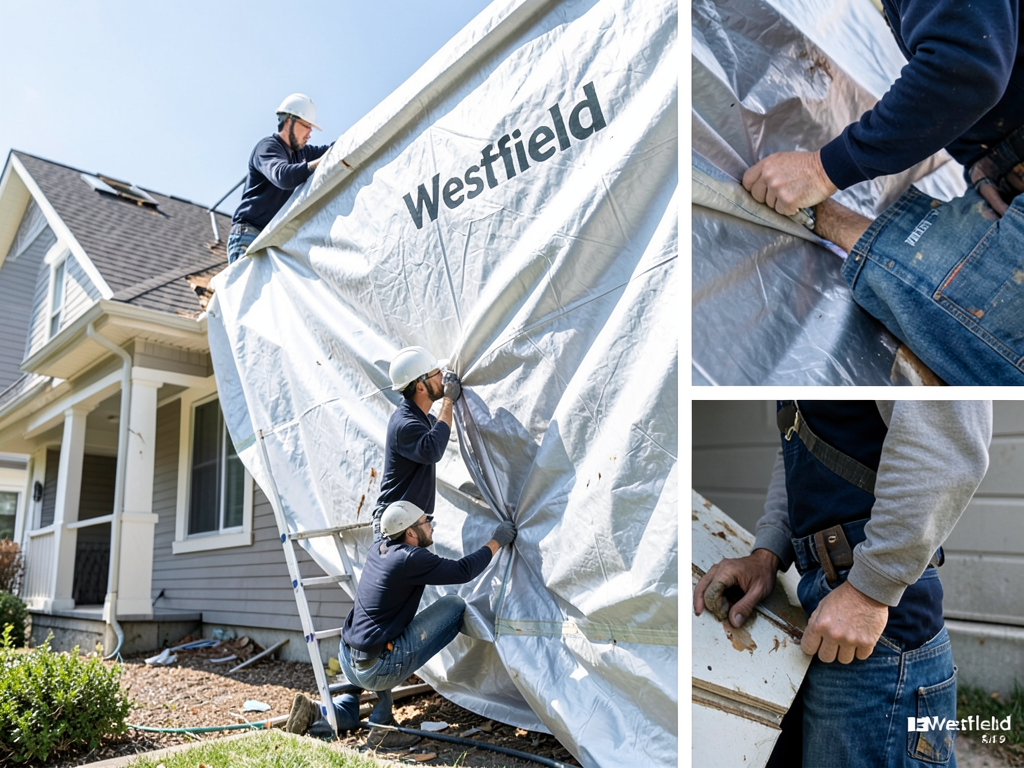
Once wind damage occurs, water begins entering your home within minutes. Quick action prevents thousands in interior repairs. Emergency tarping creates a temporary waterproof barrier until permanent repairs can begin. Professional tarping requires specific materials and techniques that differ from simply throwing a tarp over the roof. Getting emergency roof repairs in Broad Ripple before the next big rain.
Emergency tarping process:
- Safety Assessment
Check for downed power lines and structural hazards before accessing the roof. Never walk on a severely damaged roof surface.
- Material Selection
Use at least 14-mil reinforced polyethylene tarps with UV resistance. Standard hardware store tarps tear too easily in subsequent winds.
- Proper Anchoring
Secure tarps with 2×4 boards screwed through the tarp into sound decking. Nails pull out under wind pressure.
- Water Channeling
Create a slope that directs water toward gutters or off the roof edge. Flat tarps pool water and fail.
- Perimeter Sealing
Extend tarps at least 4 feet beyond visible damage on all sides. Wind finds gaps in coverage.
Call (317) 703-7557 for 24/7 emergency tarping service if you notice active leaks or missing shingles after high winds.
Identifying wind damage on Westfield homes
Wind damage shows distinct patterns that differ from hail or impact damage. After a windstorm, walk around your property during daylight and look for these specific indicators. Early detection prevents small problems from becoming major structural issues. What to do when a hail storm hits your Fishers neighborhood.
Common wind damage signs:
- Lifted Shingle Tabs
Edges curl upward, creating a tent-like appearance. Press gently on suspected areas. If they flex easily, the seal has broken.
- Granule Loss
Black sand-like granules accumulate in gutters or downspouts. This exposes the asphalt layer to UV damage.
- Creased Shingles
Shingles fold sharply at mid-tab, creating a visible crease line. These cannot be repaired and must be replaced.
- Flashing Separation
Metal strips around chimneys, vents, and valleys pull away from surfaces. This creates direct water entry points.
- Debris Impact
Fallen tree limbs or wind-thrown objects create punctures or cracks in roofing materials. How to navigate a roofing insurance claim in Brownsburg without the headache.
Westfield’s location in Hamilton County subjects homes to specific wind patterns. The open farmland to the north allows unimpeded wind flow that accelerates as it crosses developed areas. Homes near Grand Park often experience higher wind velocities due to the open sports fields that create wind tunnels.
Westfield roof insurance claim process
Insurance claims for wind damage follow specific procedures that maximize your coverage. Most Westfield homeowners carry wind damage coverage through their standard homeowners policies, but claim approval depends on proper documentation and timing.
Insurance claim steps:
- Immediate Documentation
Take clear photos of all damage before any repairs begin. Include wide shots showing context and close-ups of specific issues.
- Professional Inspection
Schedule a certified roofing inspection within 48 hours. Insurance adjusters expect third-party verification of damage extent. Roofing Beech Grove.
- Permit Acquisition
Obtain Hamilton County roofing permits before work begins. Insurance companies require proof of code compliance for full reimbursement.. Read more about How to spot a storm chaser roofing scam in the Fletcher Place area.
- Adjuster Meeting
Have your roofing contractor present during the insurance adjuster’s inspection. Contractors identify damage that adjusters might miss.
- Scope Agreement
Review the insurance scope of work with your contractor. Ensure all necessary repairs are included before signing.
Indiana insurance law requires adjusters to provide written estimates within 30 days of inspection. Most Westfield claims process within 2-3 weeks if documentation is complete.
Why Westfield homeowners trust local roofing specialists
Local roofing contractors understand Westfield’s specific challenges. The area’s mix of new construction in Bridgewater and established neighborhoods near Shamrock Estates creates different wind exposure patterns. Local contractors know which neighborhoods experience the highest wind velocities and which building practices resist wind damage best.
Westfield-specific considerations:
| Neighborhood Type | Wind Vulnerability | Recommended Materials |
|---|---|---|
| New Construction | Moderate | Architectural shingles with enhanced adhesive |
| Established Areas | High | Impact-resistant shingles with reinforced underlayment |
| Lakefront Properties | Very High | Metal roofing or premium architectural shingles |
Local building codes in Westfield require specific wind resistance ratings for new roofing installations. The Hamilton County Building Department enforces IRC Section R301.2.1, which mandates minimum design wind speeds of 115 mph for most residential structures.
Preventing future wind damage
Prevention costs less than repairs. Several upgrades strengthen your roof against future wind events. These improvements pay for themselves through avoided damage and potential insurance discounts.
Wind-resistant upgrades:
- Enhanced Underlayment
Self-adhering ice and water shield provides secondary protection if shingles fail. Install in valleys and along eaves.
- Ring-Shank Nails
These twisted nails resist pull-out better than smooth-shank alternatives. They increase uplift resistance by 30-40%.
- Sealing Existing Shingles
Roofing cement applied to lifting tabs prevents wind from getting under edges. This extends shingle life by 3-5 years.
- Tree Management
Trim branches within 10 feet of your roof. Wind-thrown debris causes most impact damage during storms.
Regular inspections catch problems before wind damage occurs. Schedule professional inspections every two years or after major storms.
Frequently Asked Questions
How fast does wind damage need repair?
Wind damage requires immediate attention. Water enters through damaged areas within 30 minutes of rainfall. Temporary tarping prevents interior damage while permanent repairs are scheduled.
What wind speed causes roof damage?
Asphalt shingles begin lifting at 60 mph sustained winds. Damage accelerates rapidly above 70 mph. Westfield experiences these speeds during severe thunderstorms 2-3 times annually.
Will my insurance cover wind damage?
Most standard homeowners policies cover wind damage to roofing. Coverage depends on your specific policy terms and the cause of damage. Sudden, accidental damage from storms is typically covered.
How long do wind damage repairs take?
Minor repairs take 1-2 days. Complete roof replacement requires 2-5 days depending on home size and weather conditions. Emergency tarping provides immediate protection while permanent repairs are scheduled.
Should I file a claim for minor damage?
Consider repair costs versus your deductible. If damage is minor and below your deductible, direct repair often makes more financial sense than filing a claim.
Wind damage creates immediate risks for Westfield homeowners. Quick action prevents water damage and protects your home’s structure. Professional assessment ensures all damage is identified and properly repaired. Call (317) 703-7557 today to schedule your wind damage inspection before the next storm hits.
Don’t wait for the next high wind warning. Contact our Westfield roofing specialists now to protect your home from wind damage. Our team understands local building codes and insurance requirements specific to Hamilton County. We provide free inspections and detailed damage assessments to help you make informed decisions about your roof’s condition. For more information, visit FEMA wind damage guidelines. For more information, visit NRCA roofing standards.
{
“@context”: “https://schema.org”,
“@type”: “BlogPosting”,
“headline”: “A homeowner’s guide to roof wind damage in Westfield”,
“description”: “Learn how to identify and repair wind damage to your Westfield roof. Get expert tips on emergency tarping, insurance claims, and local building codes from Indiana specialists.”,
“wordCount”: 1211,
“datePublished”: “2026-03-05T12:15:00.000Z”,
“dateModified”: “2026-03-05T12:15:00.000Z”,
“inLanguage”: “en-US”,
“mainEntityOfPage”: {
“@type”: “WebPage”,
“@id”: “https://eliteroofingindianapolis.com”
},
“publisher”: {
“@type”: “LocalBusiness”,
“name”: “Elite Roofing Indianapolis”,
“url”: “https://eliteroofingindianapolis.com”
},
“author”: {
“@type”: “Organization”,
“name”: “Elite Roofing Indianapolis”,
“url”: “https://eliteroofingindianapolis.com”
},
“image”: {
“@type”: “ImageObject”,
“url”: “https://eliteroofingindianapolis.com/wp-content/uploads/2026/03/a-homeowner-s-guide-to-roof-wind-damage-in-westfie-1.png”
}
}
{
“@context”: “https://schema.org”,
“@type”: “RoofingContractor”,
“name”: “Elite Roofing Indianapolis”,
“url”: “https://eliteroofingindianapolis.com”,
“address”: {
“@type”: “PostalAddress”,
“addressLocality”: “Indianapolis”
},
“areaServed”: {
“@type”: “City”,
“name”: “Indianapolis”
}
}
{
“@context”: “https://schema.org”,
“@type”: “FAQPage”,
“mainEntity”: [
{
“@type”: “Question”,
“name”: “How fast does wind damage need repair?”,
“acceptedAnswer”: {
“@type”: “Answer”,
“text”: “Wind damage requires immediate attention. Water enters through damaged areas within 30 minutes of rainfall. Temporary tarping prevents interior damage while permanent repairs are scheduled.”
}
},
{
“@type”: “Question”,
“name”: “What wind speed causes roof damage?”,
“acceptedAnswer”: {
“@type”: “Answer”,
“text”: “Asphalt shingles begin lifting at 60 mph sustained winds. Damage accelerates rapidly above 70 mph. Westfield experiences these speeds during severe thunderstorms 2-3 times annually.”
}
},
{
“@type”: “Question”,
“name”: “Will my insurance cover wind damage?”,
“acceptedAnswer”: {
“@type”: “Answer”,
“text”: “Most standard homeowners policies cover wind damage to roofing. Coverage depends on your specific policy terms and the cause of damage. Sudden, accidental damage from storms is typically covered.”
}
},
{
“@type”: “Question”,
“name”: “How long do wind damage repairs take?”,
“acceptedAnswer”: {
“@type”: “Answer”,
“text”: “Minor repairs take 1-2 days. Complete roof replacement requires 2-5 days depending on home size and weather conditions. Emergency tarping provides immediate protection while permanent repairs are scheduled.”
}
},
{
“@type”: “Question”,
“name”: “Should I file a claim for minor damage?”,
“acceptedAnswer”: {
“@type”: “Answer”,
“text”: “Consider repair costs versus your deductible. If damage is minor and below your deductible, direct repair often makes more financial sense than filing a claim.”
}
}
]
}
{
“@context”: “https://schema.org”,
“@type”: “HowTo”,
“name”: “Emergency Roof Tarping”,
“step”: [
{
“@type”: “HowToStep”,
“position”: 1,
“name”: “Safety Assessment”,
“text”: “Check for downed power lines and structural hazards before accessing the roof. Never walk on a severely damaged roof surface.”
},
{
“@type”: “HowToStep”,
“position”: 2,
“name”: “Material Selection”,
“text”: “Use at least 14-mil reinforced polyethylene tarps with UV resistance. Standard hardware store tarps tear too easily in subsequent winds.”
},
{
“@type”: “HowToStep”,
“position”: 3,
“name”: “Proper Anchoring”,
“text”: “Secure tarps with 2×4 boards screwed through the tarp into sound decking. Nails pull out under wind pressure.”
},
{
“@type”: “HowToStep”,
“position”: 4,
“name”: “Water Channeling”,
“text”: “Create a slope that directs water toward gutters or off the roof edge. Flat tarps pool water and fail.”
},
{
“@type”: “HowToStep”,
“position”: 5,
“name”: “Perimeter Sealing”,
“text”: “Extend tarps at least 4 feet beyond visible damage on all sides. Wind finds gaps in coverage.”
}
],
“image”: “https://eliteroofingindianapolis.com/wp-content/uploads/2026/03/a-homeowner-s-guide-to-roof-wind-damage-in-westfie-1.png”
}
{
“@context”: “https://schema.org”,
“@type”: “BreadcrumbList”,
“itemListElement”: [
{
“@type”: “ListItem”,
“position”: 1,
“name”: “Home”,
“item”: “https://eliteroofingindianapolis.com”
},
{
“@type”: “ListItem”,
“position”: 2,
“name”: “Blog”,
“item”: “https://eliteroofingindianapolis.com/blog”
},
{
“@type”: “ListItem”,
“position”: 3,
“name”: “A homeowner’s guide to roof wind damage in Westfield”
}
]
}
{
“@context”: “https://schema.org”,
“@type”: “Service”,
“serviceType”: “Roofing”,
“provider”: {
“@type”: “LocalBusiness”,
“name”: “Elite Roofing Indianapolis”,
“url”: “https://eliteroofingindianapolis.com”
},
“areaServed”: {
“@type”: “City”,
“name”: “Indianapolis”
},
“description”: “Learn how to identify and repair wind damage to your Westfield roof. Get expert tips on emergency tarping, insurance claims, and local building codes from Indiana specialists.”
}